
 3D Gel
 Accessories
 Acrylic Brushes
 Art Brushes
 Clippers
 Design
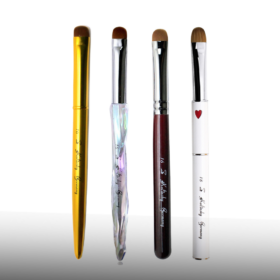 French Brushes
 Builder Gel
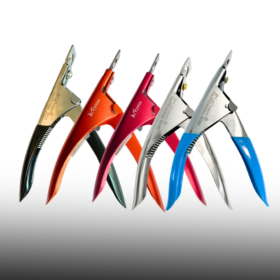 Nail Tip Cutter
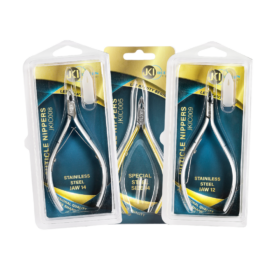 Nippers
 Pusher
 Scissors
 Tweezers
Jun
Blogs
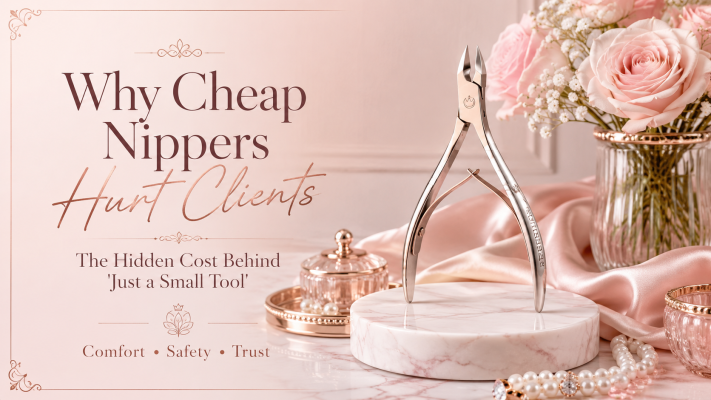
Why Cheap Nippers Hurt Clients: The Hidden Cost Behind “Just a Small Tool”
On a manicure table, nippers look like a tiny detail. But in real salon work, nippers are a “skin tool,” which means they can directly impact comfort, safety, and trust. When clients complain that a manicure “hurt,” “stung,” or “felt rough,” the cause is often not the nail tech’s intention—it’s a tool that doesn’t cut cleanly. That’s why the topic why cheap nippers hurt clients matters more than people think.
This article explains the real mechanics behind painful cuticle work, the warning signs of poor nippers, how cheap tools create skin trauma even with careful hands, and the smarter way to protect clients without overcomplicating your kit.
The Cuticle Zone Is Not a “Hard Surface”
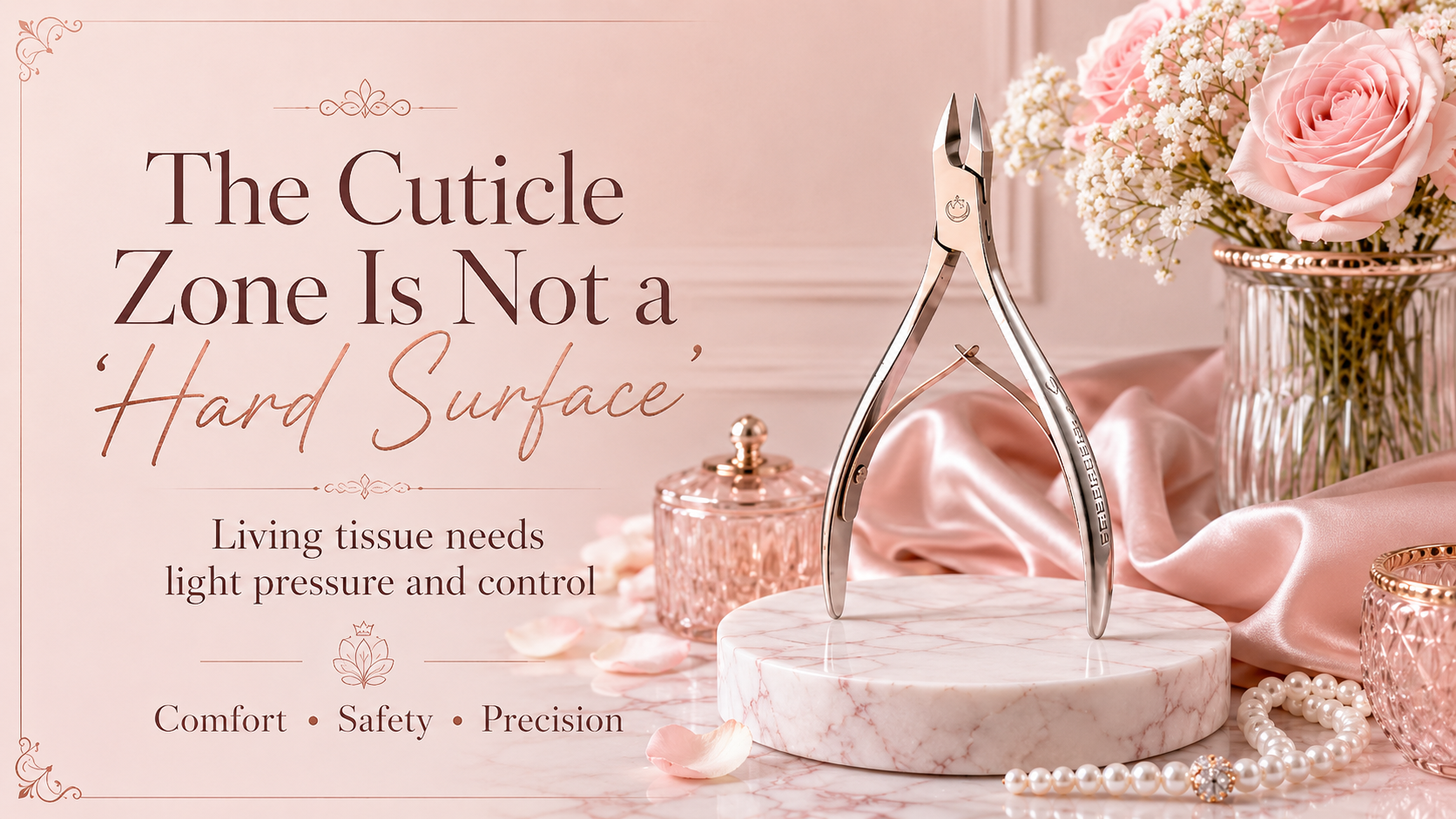
Many people treat cuticle trimming like trimming paper: snip and move on. But the cuticle area is living tissue, full of tiny blood vessels and nerve endings. It also acts as a protective seal around the nail plate. When tools don’t cut cleanly, they tug, pinch, or tear—and clients feel it immediately.
A quality nipper lets you work with light pressure and small controlled cuts. A cheap nipper often forces you to squeeze harder just to get a cut. Pressure is where pain begins.
The Main Reason Cheap Nippers Hurt: They Don’t Slice, They Chew
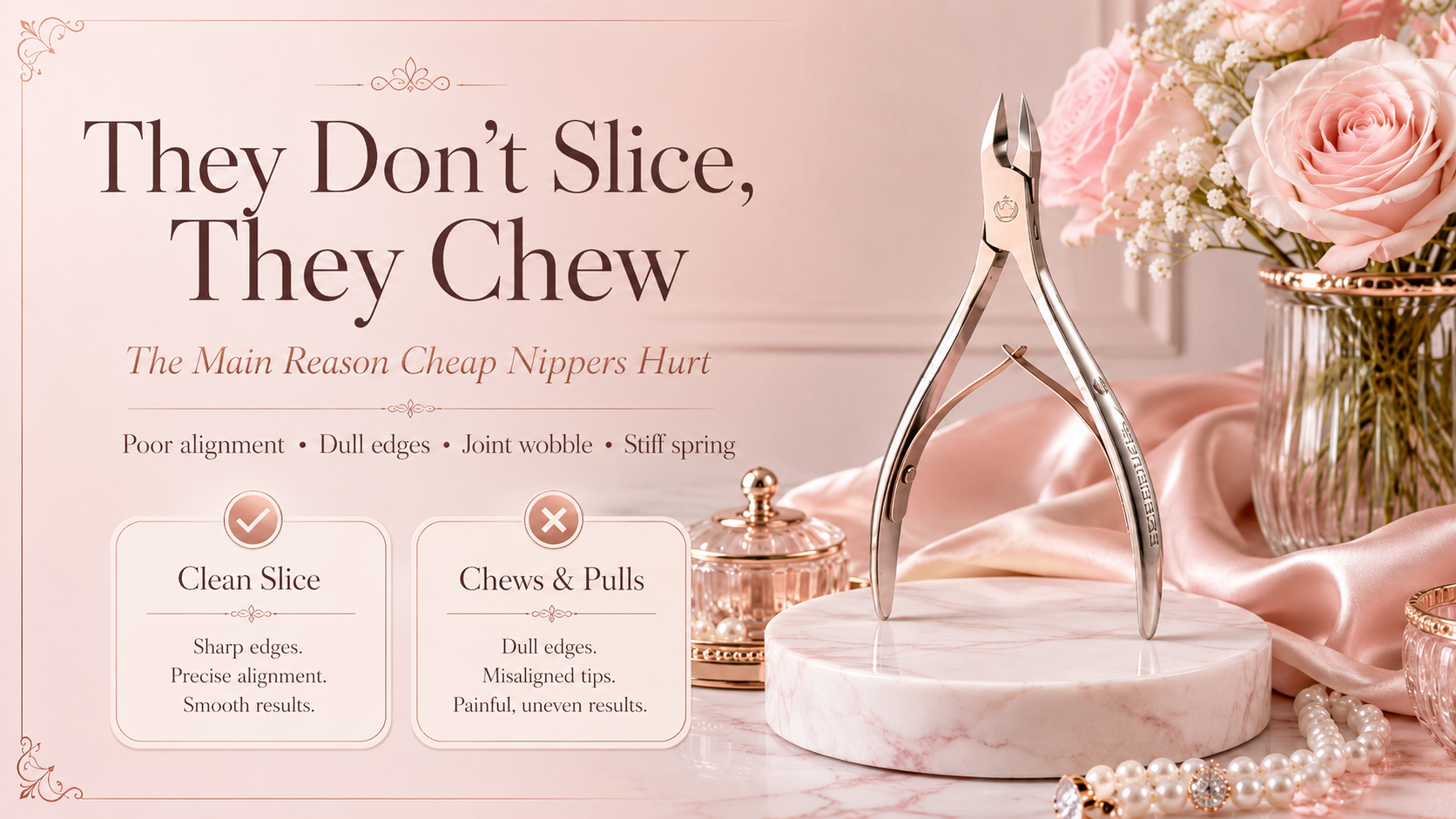
A professional nipper should slice lifted dead skin. Cheap nippers often chew it. That chewing effect happens when:
-
the jaw tips don’t meet evenly
-
the blades are dull or poorly ground
-
the joint wobbles and shifts during the cut
-
the spring action is stiff or inconsistent
Instead of one clean cut, the tool grabs tissue, pulls slightly, then tears. Even if there’s no blood, the sensation is sharp and uncomfortable. Clients describe it as a pinch, a sting, or a “rip.”
Pain Isn’t Always Visible, But Clients Remember It
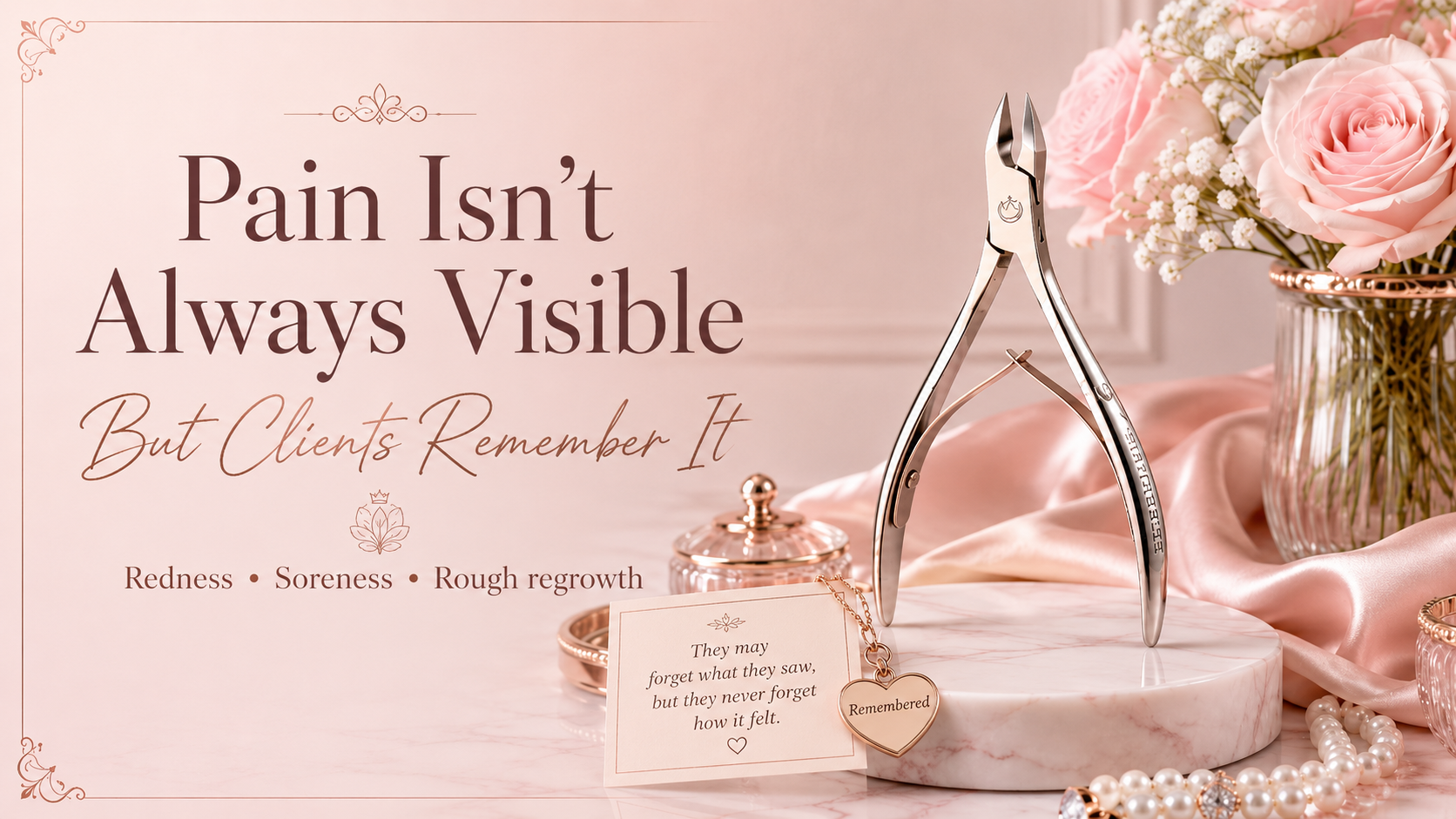
One misconception is that if there’s no bleeding, there’s no harm. Not true. Cheap nippers can cause micro-tears and irritation without obvious cuts. That often leads to:
-
redness that appears after the service
-
soreness when washing hands later
-
dry, rough regrowth that looks messy within days
-
increased hangnails because the skin barrier was disturbed
Clients may not say it directly, but they remember how the service felt. Comfort is part of quality.
Cheap Nippers Create “Over-Trimming” Pressure
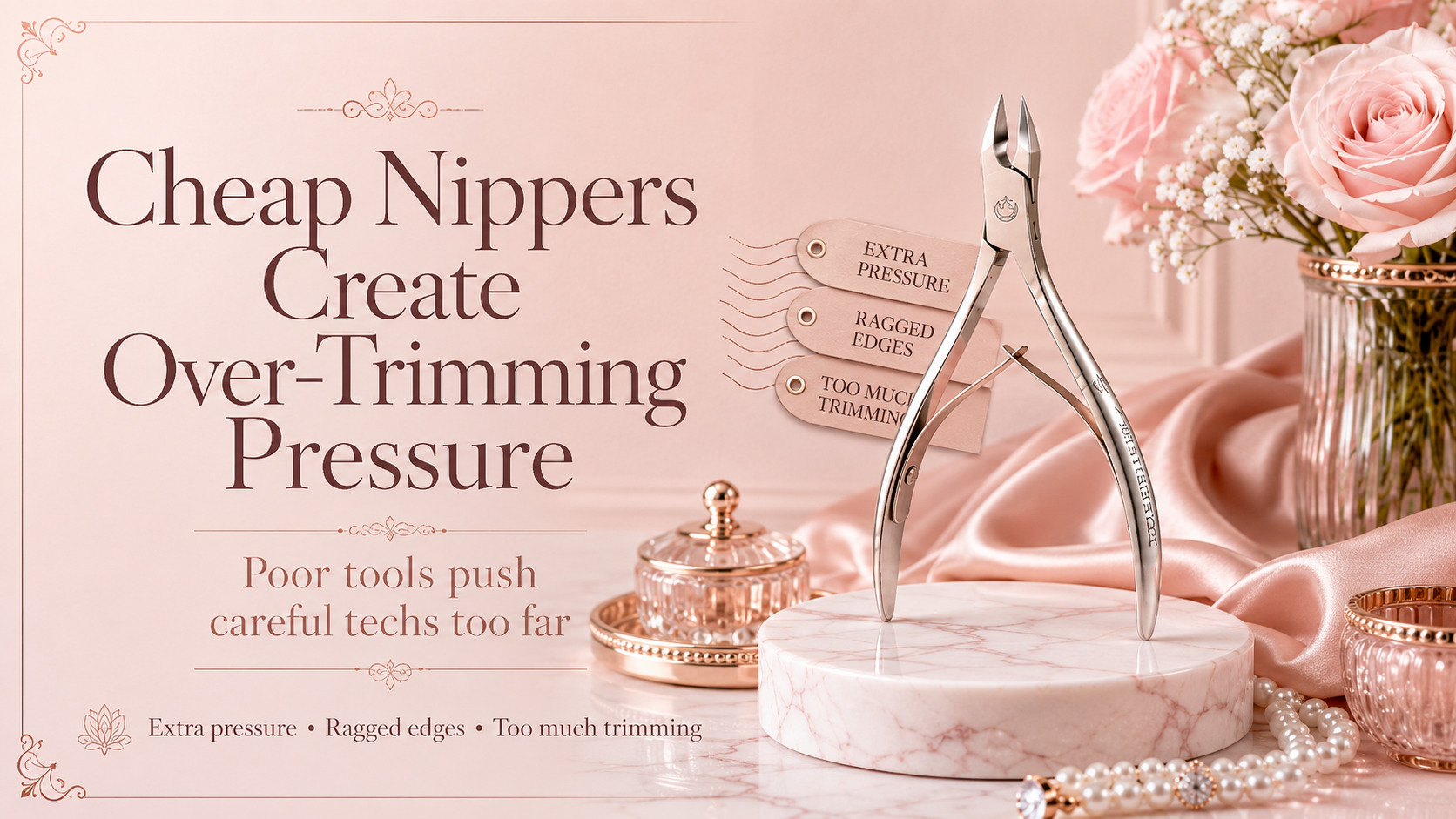
When a nipper won’t cut well, many techs unconsciously compensate by cutting more. It’s not because they want to remove living skin. It’s because ragged edges look unfinished and snag easily. So they trim again, then again, trying to “clean it up.”
This is how cheap nippers lead to:
-
trimming too deep
-
breaking the cuticle seal
-
swelling and inflammation
-
faster, thicker regrowth
In other words, poor tools push even careful techs into risky technique.
The Infection Risk Nobody Talks About
Cuticle work can create micro-cuts—even in a good service. When cheap nippers tear rather than slice, the skin damage is more irregular and can be harder to disinfect mentally because it “didn’t bleed.”
But broken skin is still broken skin. That increases the risk of:
-
irritation from product exposure near the cuticle
-
bacterial entry points (especially for clients with busy hands)
-
inflammation that makes the next service more uncomfortable
For clients with sensitive skin, diabetes, or poor circulation, even minor trauma matters.
Where Cheap Nippers Usually Fail: The Four Weak Points
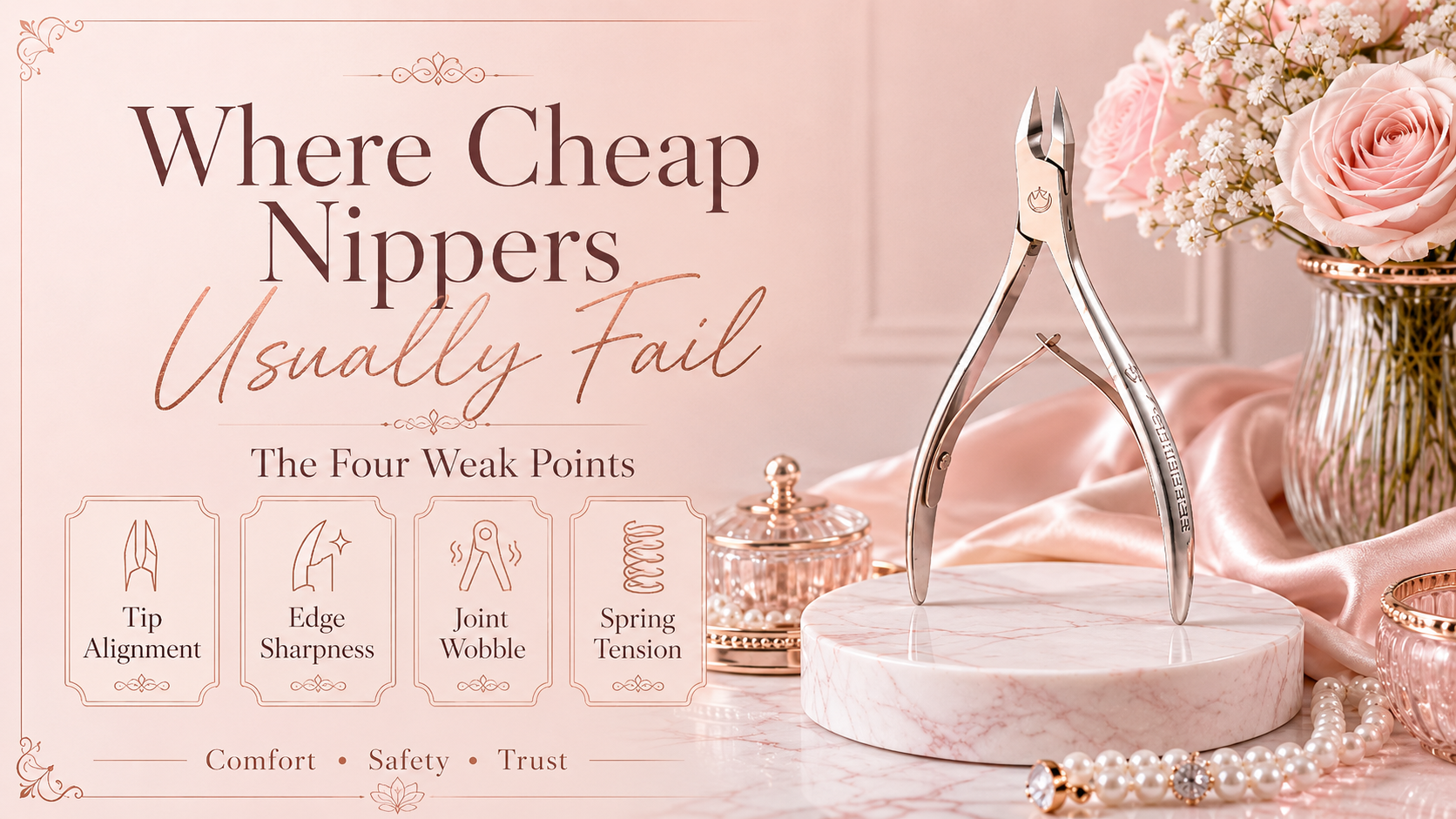
Tip alignment
If tips don’t meet perfectly, the nipper pinches and pulls. Alignment issues are the number one cause of pain.
Quick check: close the jaws under a light. If you see a gap near the tip, it’s a red flag.
Edge sharpness that disappears fast
Cheap steel dulls quickly. When sharpness drops, techs squeeze harder. Harder squeeze = higher risk.
Joint wobble
A loose joint means the cutting edge shifts while trimming. That creates inconsistent bite and unpredictable snips.
Spring tension that fights your hand
Stiff springs increase fatigue. Fatigue reduces control. Reduced control increases accidental nicks and pressure.
The Client Experience Chain: How a Bad Nipper Damages Trust
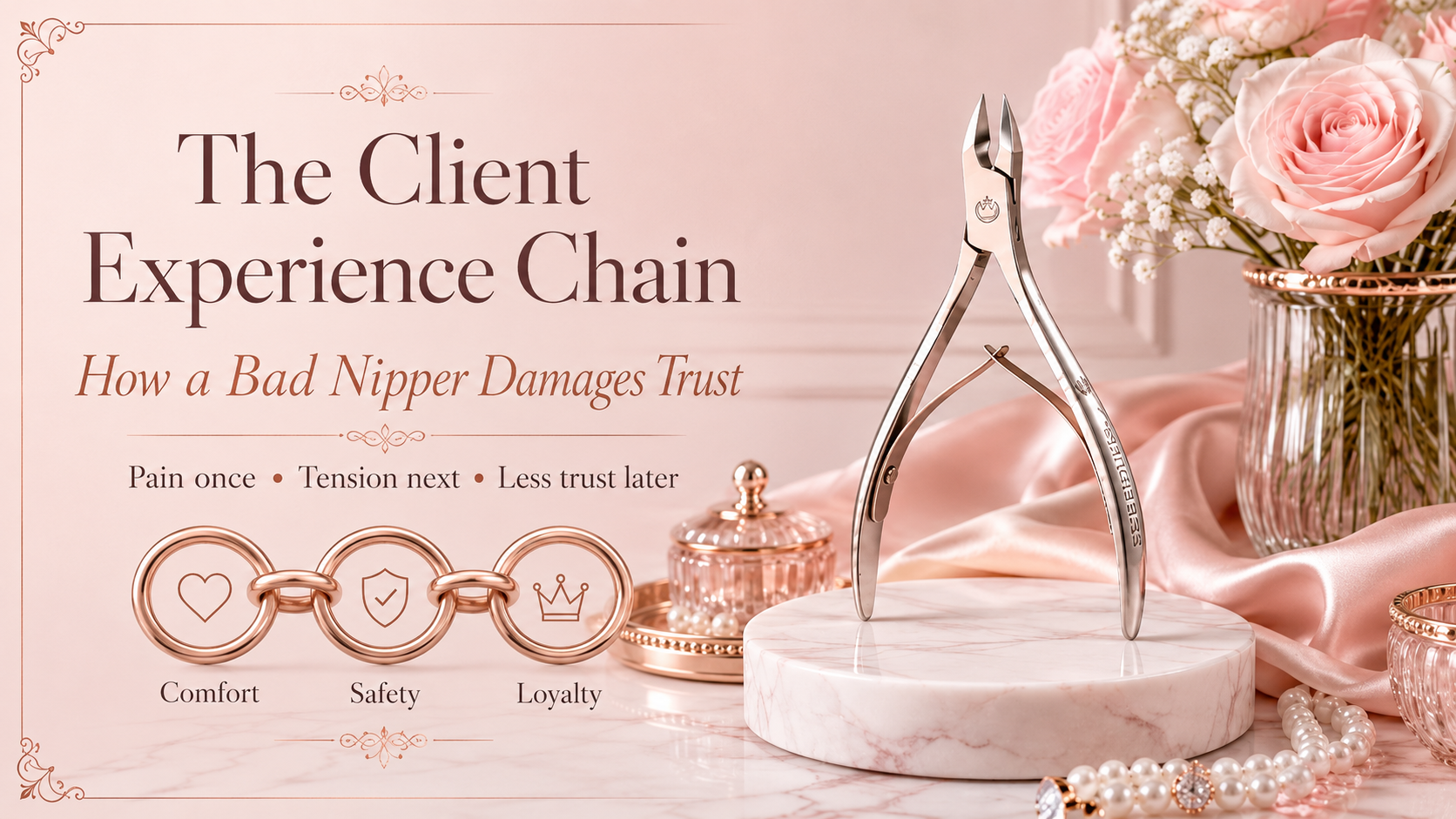
A manicure is a trust-based service. Clients relax their hands and let you work close to skin. If they feel pain once, they tense up. When clients tense up:
-
the finger moves more
-
the cut becomes harder to control
-
the risk of a nick increases
-
the service takes longer
-
the client feels less safe
One uncomfortable appointment can create a pattern of anxiety for future visits. It’s not just about the moment; it’s about long-term loyalty.
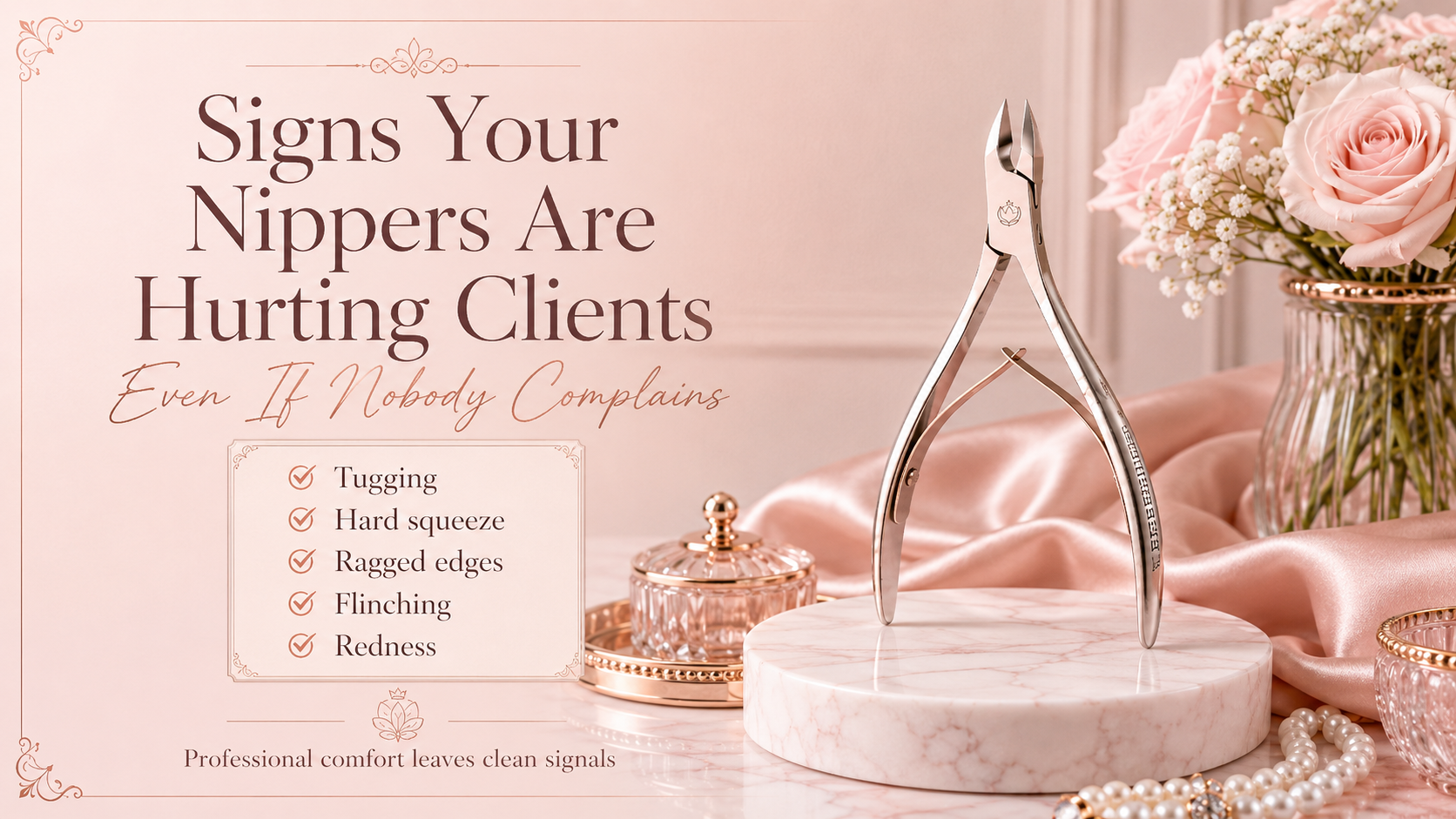
Signs Your Nippers Are Hurting Clients (Even If Nobody Complains)
-
You feel tugging instead of a clean snip
-
You need to squeeze harder than usual
-
You see ragged cuticle edges after trimming
-
You keep “going back” to fix tiny bits
-
Clients pull their hand away slightly or flinch
-
The cuticle rim looks redder than normal right after service
These are signals that the tool is not performing at a professional level.
The “Better” Approach Without Spending Crazy Money
This is not about buying the most expensive tool on the market. It’s about choosing tools that cut cleanly and stay stable.
Here’s the practical approach pros use:
-
Choose a nipper that closes cleanly with no gap at the tip
-
Choose a comfortable spring that allows light pressure
-
Keep two nippers: a main tool and a backup
-
Maintain the joint and protect alignment in storage
-
Stop using a nipper the moment it tugs and service it
The cost of one replacement is often less than the cost of one lost client.
How to Reduce Pain Even With the Same Nippers (Short-Term Fix)
If you must work with what you have today, reduce damage by adjusting technique:
-
push and lift cuticle residue first so you cut only lifted tissue
-
do micro-snips, never long continuous cuts
-
trim less and finish with oil instead of chasing “perfect removal”
-
if you feel tugging, stop and switch to a backup tool
Technique can reduce risk, but it can’t fully compensate for poor blades.
So, why cheap nippers hurt clients comes down to one core truth: cheap nippers often don’t slice cleanly. They tug, chew, and force extra pressure. That creates discomfort, irritation, and sometimes micro-trauma that clients may not notice immediately—but they will remember.
A professional manicure isn’t only measured by how it looks in a photo. It’s measured by how it feels during the service and how healthy the cuticle area looks when it grows out. Comfort is quality, and quality builds loyalty.