
 3D Gel
 Accessories
 Acrylic Brushes
 Art Brushes
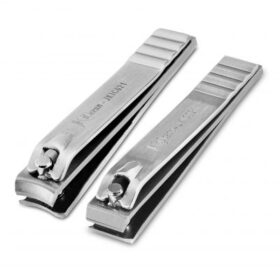 Clippers
 Design
 French Brushes
 Builder Gel
 Nail Tip Cutter
 Nippers
 Pusher
 Scissors
 Tweezers
May
Blogs
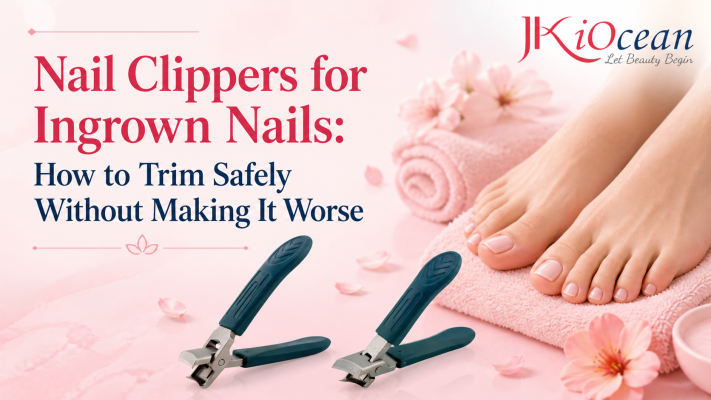
Nail Clippers for Ingrown Nails: How to Trim Safely Without Making It Worse
Searching for nail clippers for ingrown nails usually means you’re trying to solve a real problem, not just tidy your nails. Ingrown nails can be painful, stubborn, and easy to accidentally worsen—especially when trimming corners too deeply or using the wrong tool. The good news is that the right clipper and a safer trimming method can reduce pressure and help prevent future ingrowns. The bad news is that “digging it out” at home can create infection fast.
This guide focuses on practical, safer care: which type of nail clipper makes sense for ingrown-prone nails, how to trim correctly, what to avoid, and when to stop and see a podiatrist.
What Ingrown Nails Are
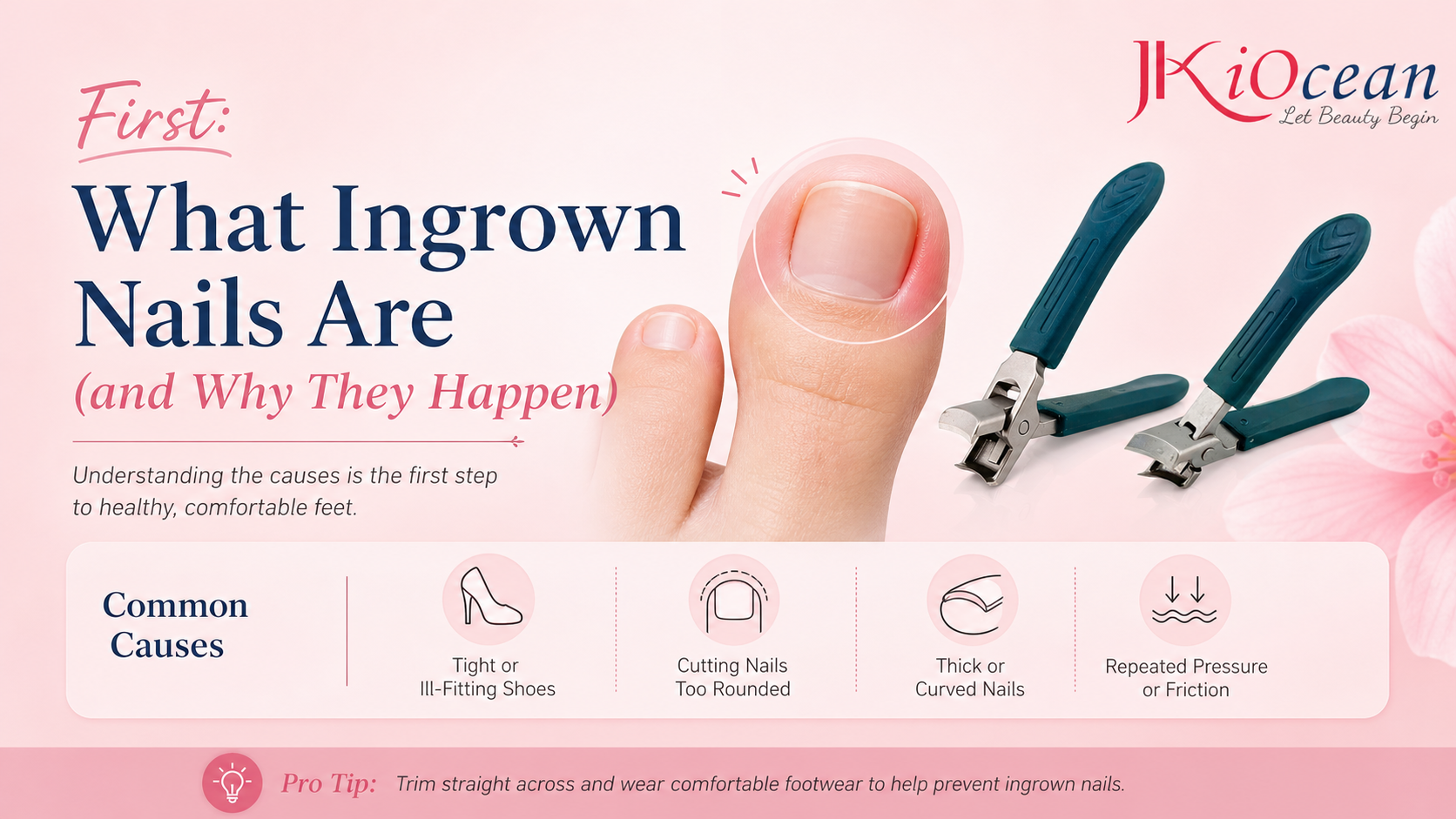
An ingrown nail occurs when the nail edge grows into the surrounding skin, usually on the big toe. It often starts as pressure and tenderness and can progress to swelling, redness, and infection.
Common causes include:
- Cutting toenails too short or rounding corners aggressively
- Tight shoes compressing the toe
- Thick or curved nail growth patterns
- Trauma (stubbing, sports, repeated pressure)
- Genetic nail shape or wider nail plates
The key is prevention: straight trimming plus gentle corner smoothing, not deep corner cutting.
Do “Ingrown Nail Clippers” Really Exist?
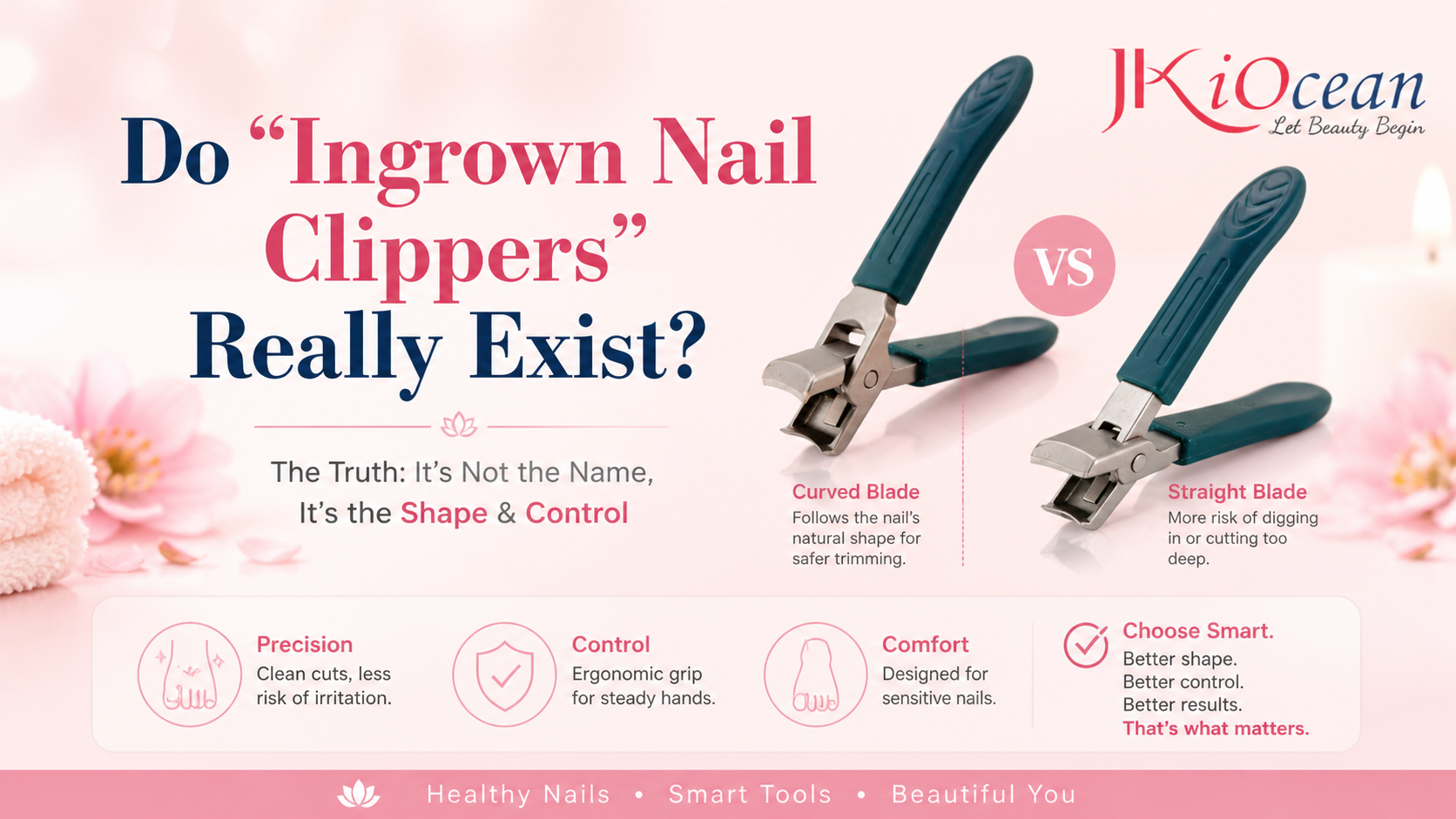
You’ll see tools marketed as “ingrown nail clippers,” but what truly matters is control and blade shape—not marketing terms.
A good nail clipper for ingrown nails helps you:
- Cut small sections cleanly (micro-bites)
- Maintain a mostly straight edge
- Avoid crushing the nail plate
- Reach corners safely without digging under skin
So rather than hunting for a magic tool, choose a clipper style that supports safe technique.
Best Types of Nail Clippers for Ingrown Nails
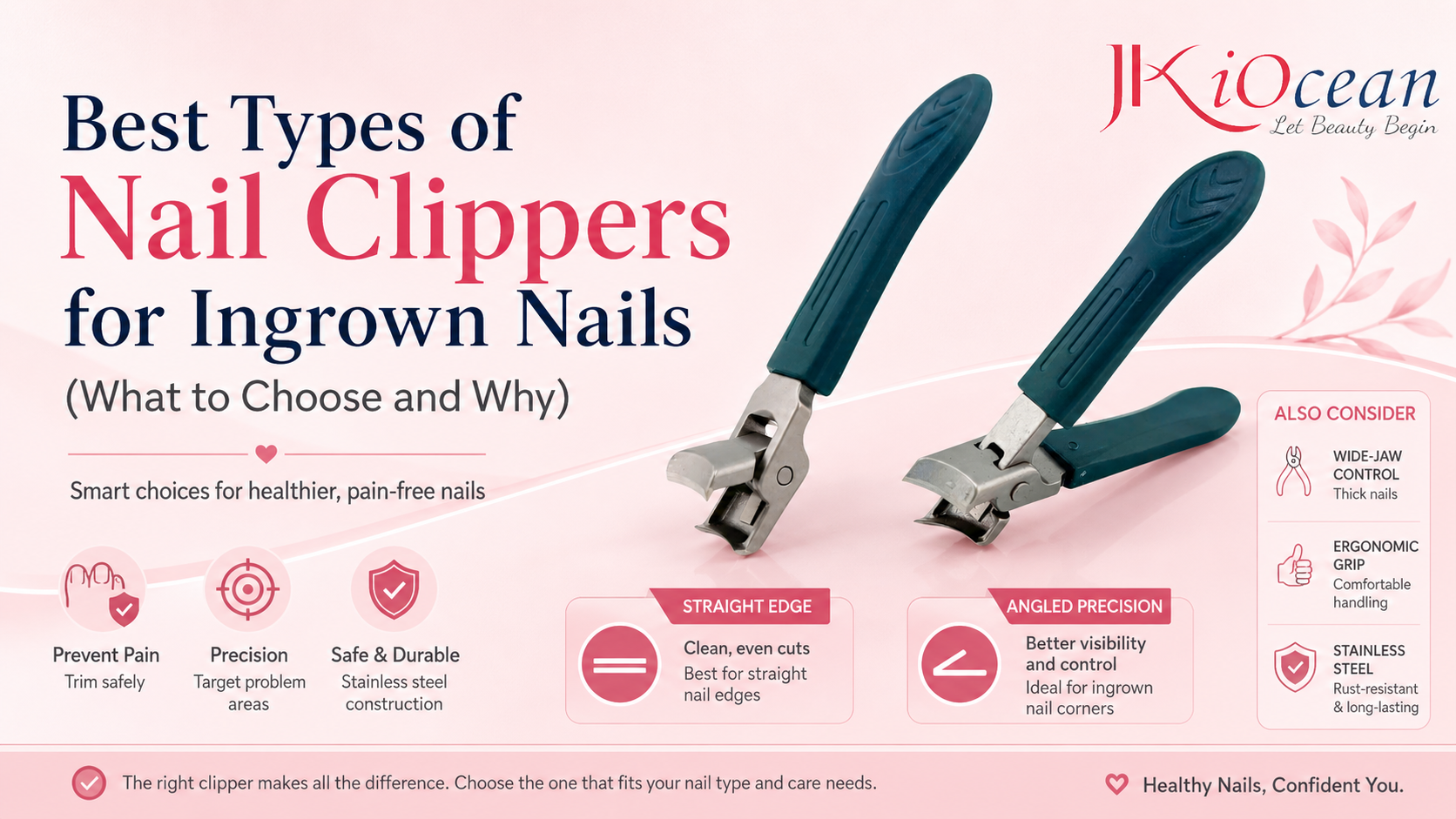
Straight-edge toenail clippers (wide jaw)
Best for: Most people who get ingrowns on toes.
Why: A straighter blade makes it easier to trim straight across, which reduces the chance of the nail growing into the skin.
Look for:
- Wide jaw opening (especially if nails are thick)
- Sharp, aligned blades
- Strong leverage so you don’t squeeze too hard
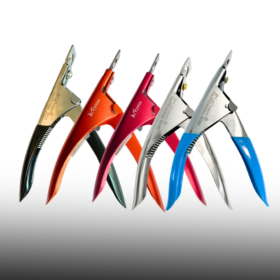
Angled head clippers (use carefully)
Best for: Precision trimming of the visible corner edge.
Why: They can help you reach the side edge without twisting your wrist.
Warning: These are the tools that tempt people to cut deep into corners. Use only for minimal edge refinement.
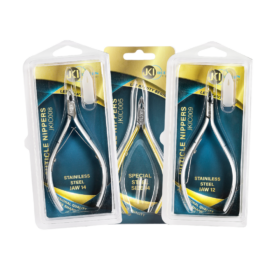
Toenail nippers (for thick nails)
Best for: Thick, hard toenails that crush under standard clippers.
Why: Nippers allow controlled micro-cuts rather than one big snap.
Important: Toenail nippers cut nails. Cuticle nippers cut skin—different tools.
Avoid tiny fingernail clippers for ingrown-prone toes
They usually don’t have enough jaw width or leverage, so people squeeze harder and crack the nail edge.
The Safer Trimming Method for Ingrown-Prone Nails
If you only remember one rule, remember this:
Trim toenails mostly straight across. Don’t dig into the corners.
Here’s the safest at-home approach for mild ingrown tendency (not infection).
Step 1: Check the toe first
Do not attempt trimming if you see:
- Pus or discharge
- Strong redness spreading beyond the nail fold
- Significant swelling or heat
- Severe pain that worsens with touch
Those signs need professional evaluation.
Step 2: Soften, then dry thoroughly
A warm foot soak for 5–7 minutes can soften the nail, making it easier to cut. Then dry the toe completely. Cutting soaking-wet nails can cause tearing or a jagged edge.
Step 3: Cut in micro-bites, straight across
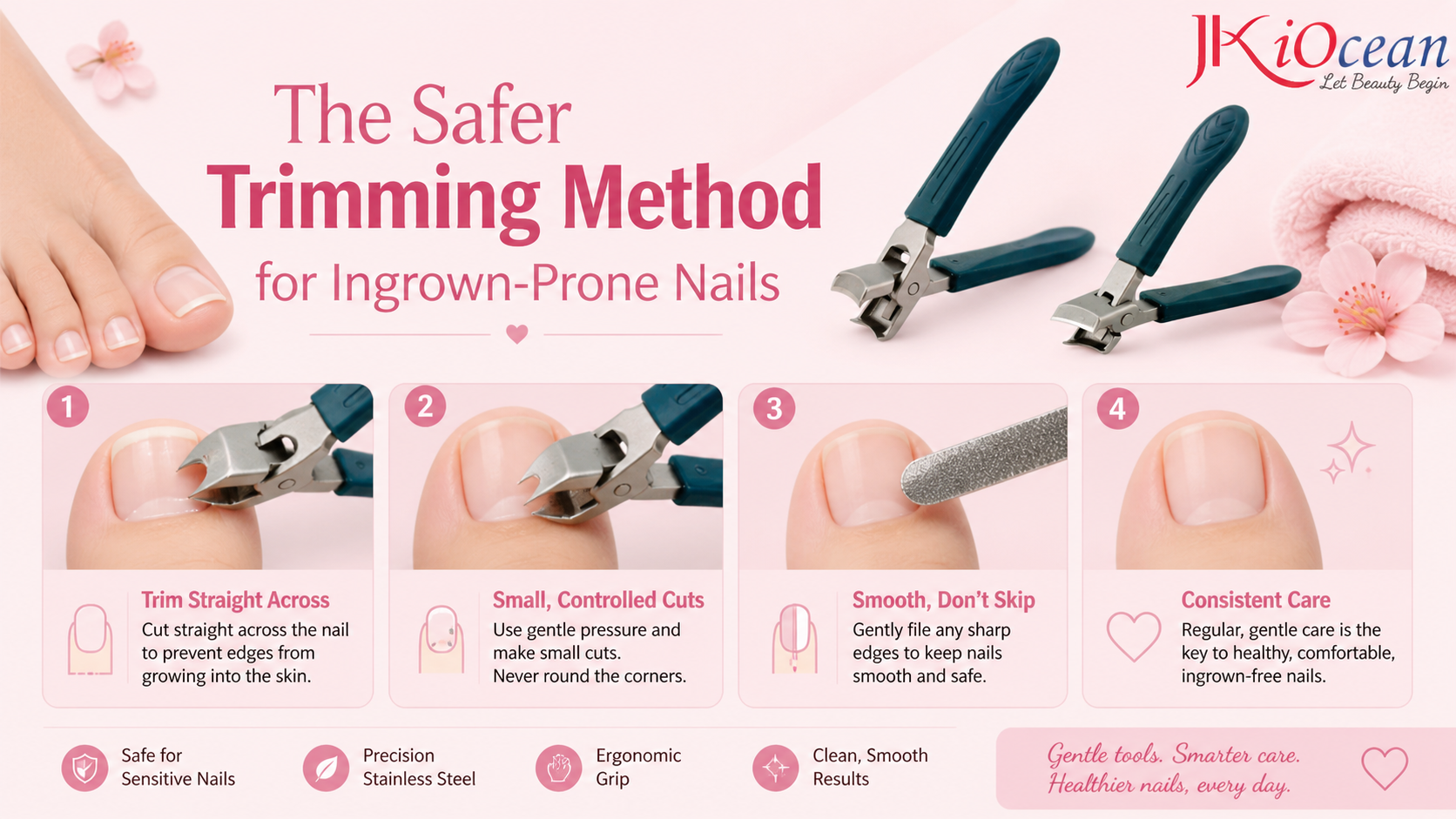
Instead of one big cut, take small bites across the free edge:
- Start in the center, move outward
- Keep the line mostly straight
- Leave a small free edge (don’t cut too short)
Step 4: Smooth corners with a file, not more cutting
Use a file to soften sharp corners. The goal is a comfortable edge, not a rounded “U” shape.
Step 5: Reduce pressure, don’t “remove” the corner
If a corner feels tight, the instinct is to cut deeper. That often makes ingrowns worse. The safer option is to relieve pressure gradually by keeping the edge straight and smoothing the corner with a file.
What NOT to Do (These Make Ingrown Nails Worse)
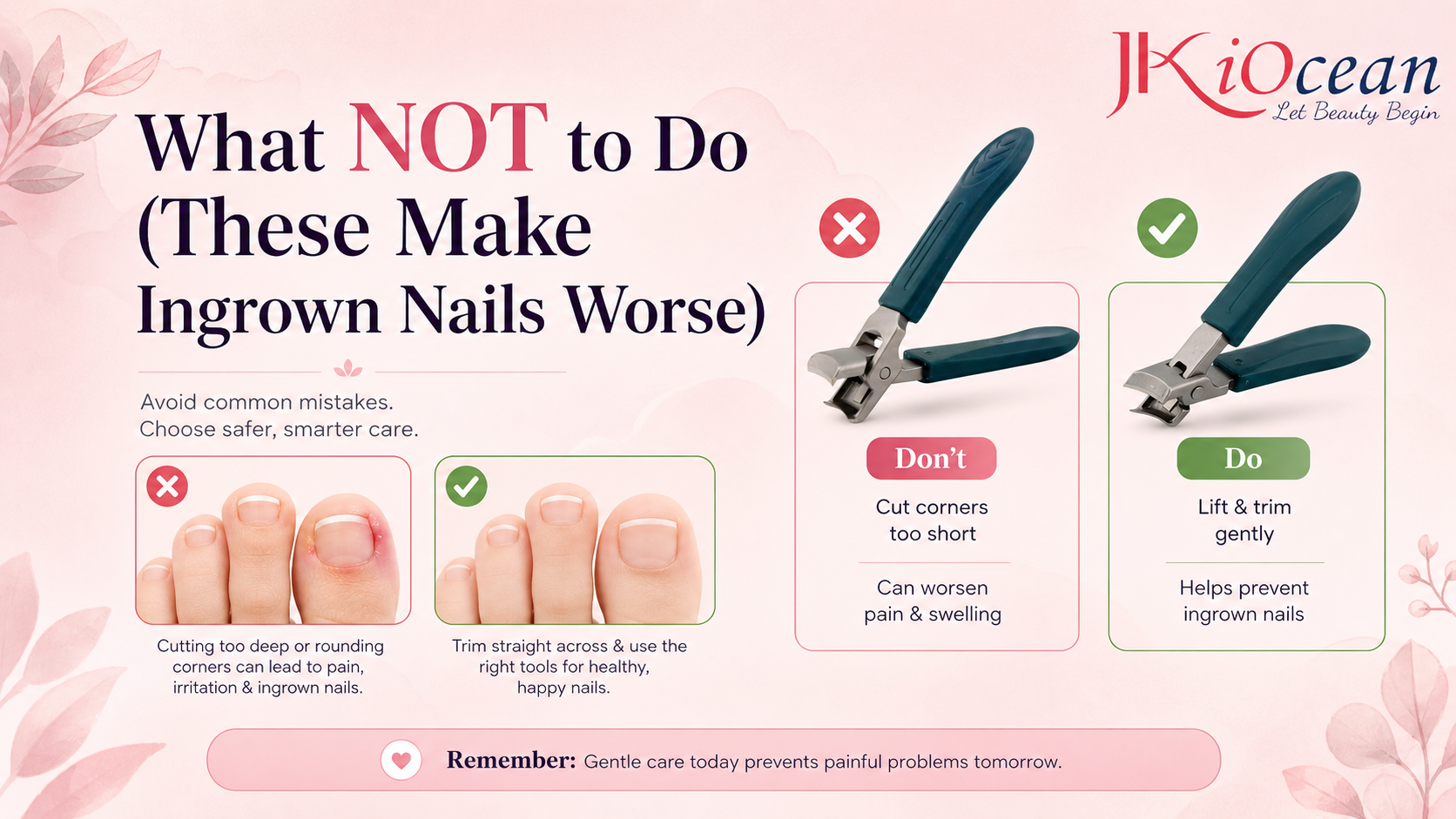
- Don’t cut a deep “V” into the nail center (old myth; doesn’t fix growth direction)
- Don’t dig under the nail corner with a sharp tool
- Don’t rip a corner off if it’s snagging
- Don’t cut extremely short to “stop it from growing”
- Don’t attempt aggressive removal if there’s swelling or infection
At-home care should be about gentle maintenance, not surgical removal.
Helpful Supportive Care After Trimming
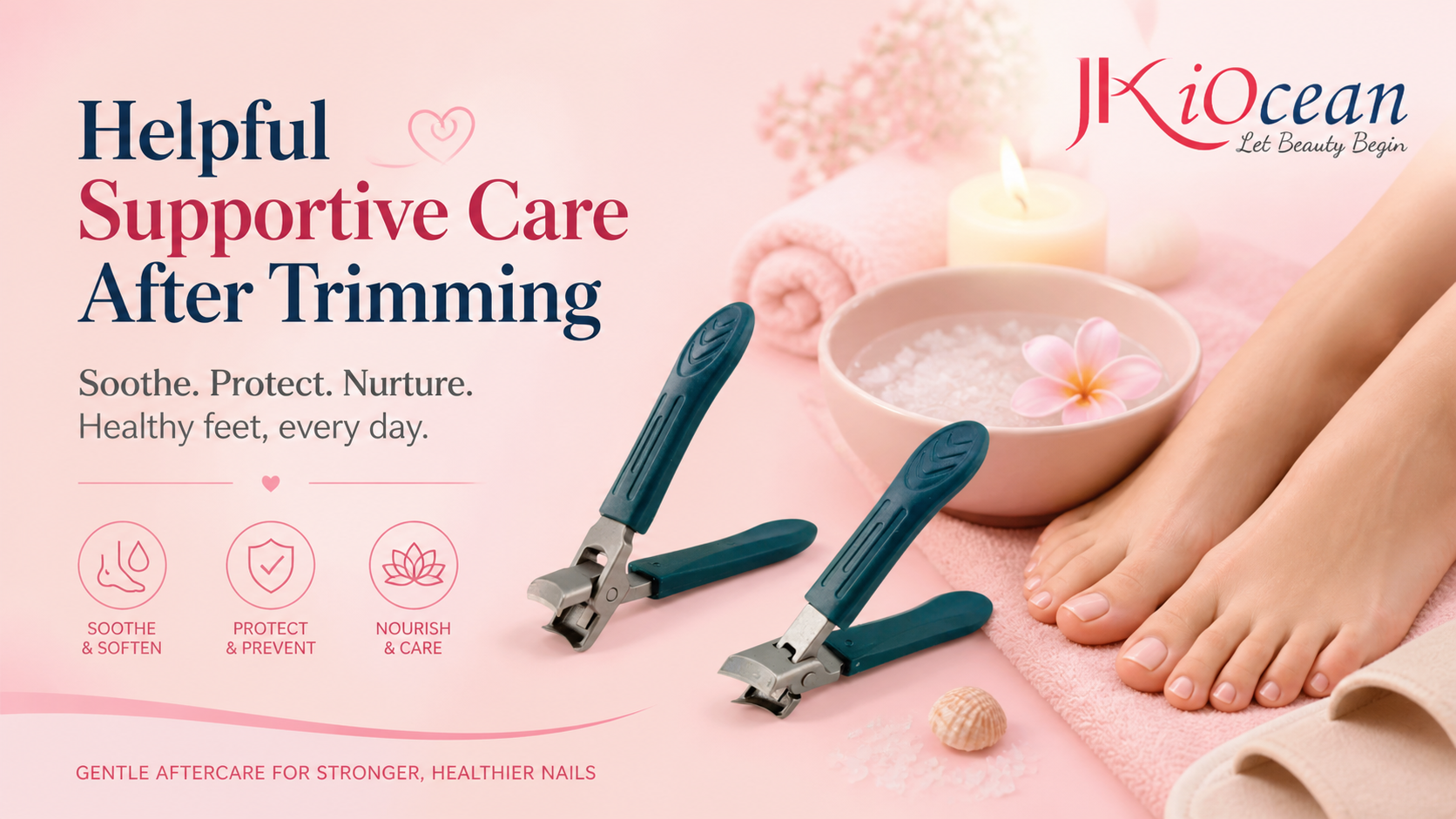
For mild discomfort:
- Warm saltwater soak for a few days
- Keep feet dry and wear open-toe or roomy shoes
- Use a tiny cotton roll under the nail edge only if you can do it gently and cleanly
- Avoid pressing the corner deeper with tight footwear
If pain increases, stop home care and seek professional help.
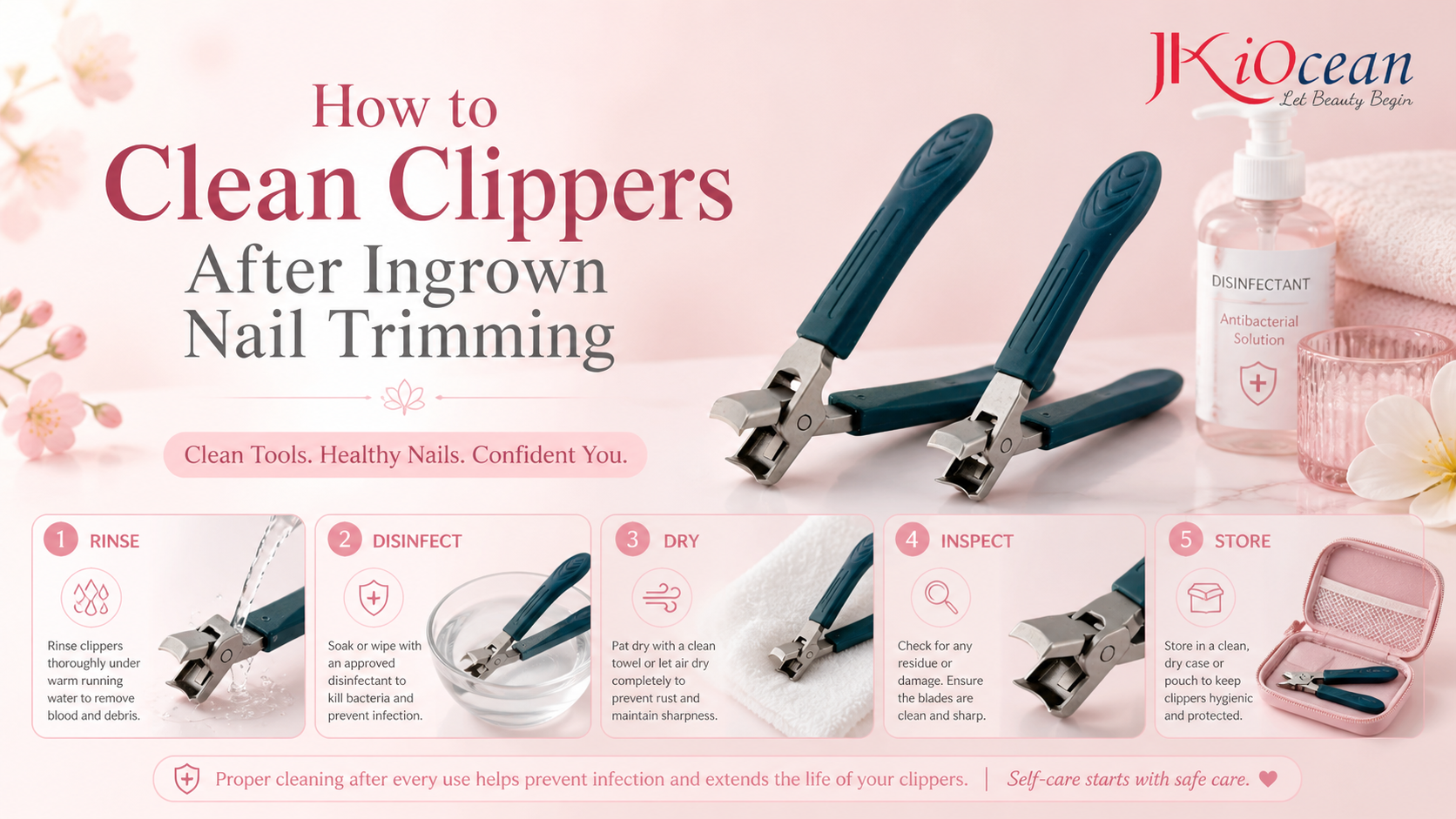
How to Clean Clippers After Ingrown Nail Trimming
Toenail tools can carry bacteria, and ingrown nails increase infection risk.
Basic cleaning steps:
- Rinse off debris
- Wash with soap and warm water
- Disinfect with alcohol or a proper disinfectant
- Dry fully (prevents rust and dullness)
- Store in a clean, closed case
Do not share clippers between family members.
When to See a Podiatrist (Don’t Wait Too Long)
Professional care is the safest option if:
- You have diabetes, poor circulation, or neuropathy
- The toe is swollen, hot, or draining fluid
- Pain is severe or recurring
- The nail is very curved or thick
- You can’t reach your feet safely
- You keep getting ingrowns despite trimming straight
A podiatrist can safely reduce the nail edge, treat infection, and recommend long-term solutions.
Prevention: The Simple Routine That Works
To reduce ingrown risk long-term:
- Trim straight across every 3–6 weeks
- File corners smooth instead of cutting deep
- Choose shoes with a wider toe box
- Keep feet dry; change socks daily
- Don’t use nails as tools (prying corners triggers trauma)
Prevention is slower than a quick “dig out,” but it’s far more effective.
The best nail clippers for ingrown nails are the ones that help you trim straight, small, controlled cuts without forcing corners. A straight-edge wide-jaw toenail clipper is the safest starting point for most people. Pair it with a file for corner smoothing and a hygiene routine to avoid spreading bacteria.
Most importantly, recognize the boundary between mild maintenance and a medical issue. If swelling, drainage, severe pain, or chronic recurrence shows up, professional care is the smartest—and safest—move.