
 3D Gel
 Accessories
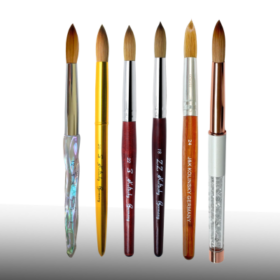 Acrylic Brushes
 Art Brushes
 Clippers
 Design
 French Brushes
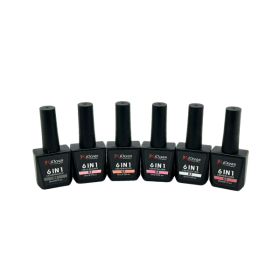 Builder Gel
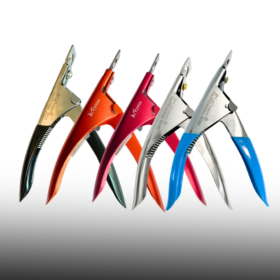 Nail Tip Cutter
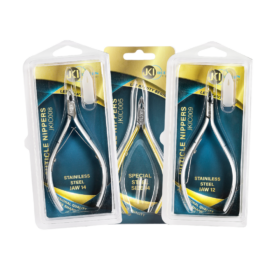 Nippers
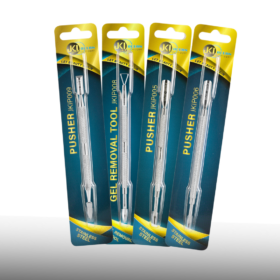 Pusher
 Scissors
 Tweezers
Jun
Blogs
Why Professional Nail Techs Prefer Kolinsky Brushes: The Real Reasons (Beyond the Hype)
Walk into a busy salon on a Saturday and you’ll see it fast: some techs finish a clean acrylic set in record time, with minimal filing and a sharp cuticle line. Others are still fighting dry beads, dragging product, or a brush that won’t behave. Skill matters, but tools matter too—and that’s why many experienced techs lean toward Kolinsky brushes.
This article isn’t here to oversell you. It’s here to explain why professional nail techs prefer Kolinsky brushes, what changes in real-world work, and when a synthetic brush can actually be the smarter choice.
The “Bead Clock” Concept: Pros Care About Seconds
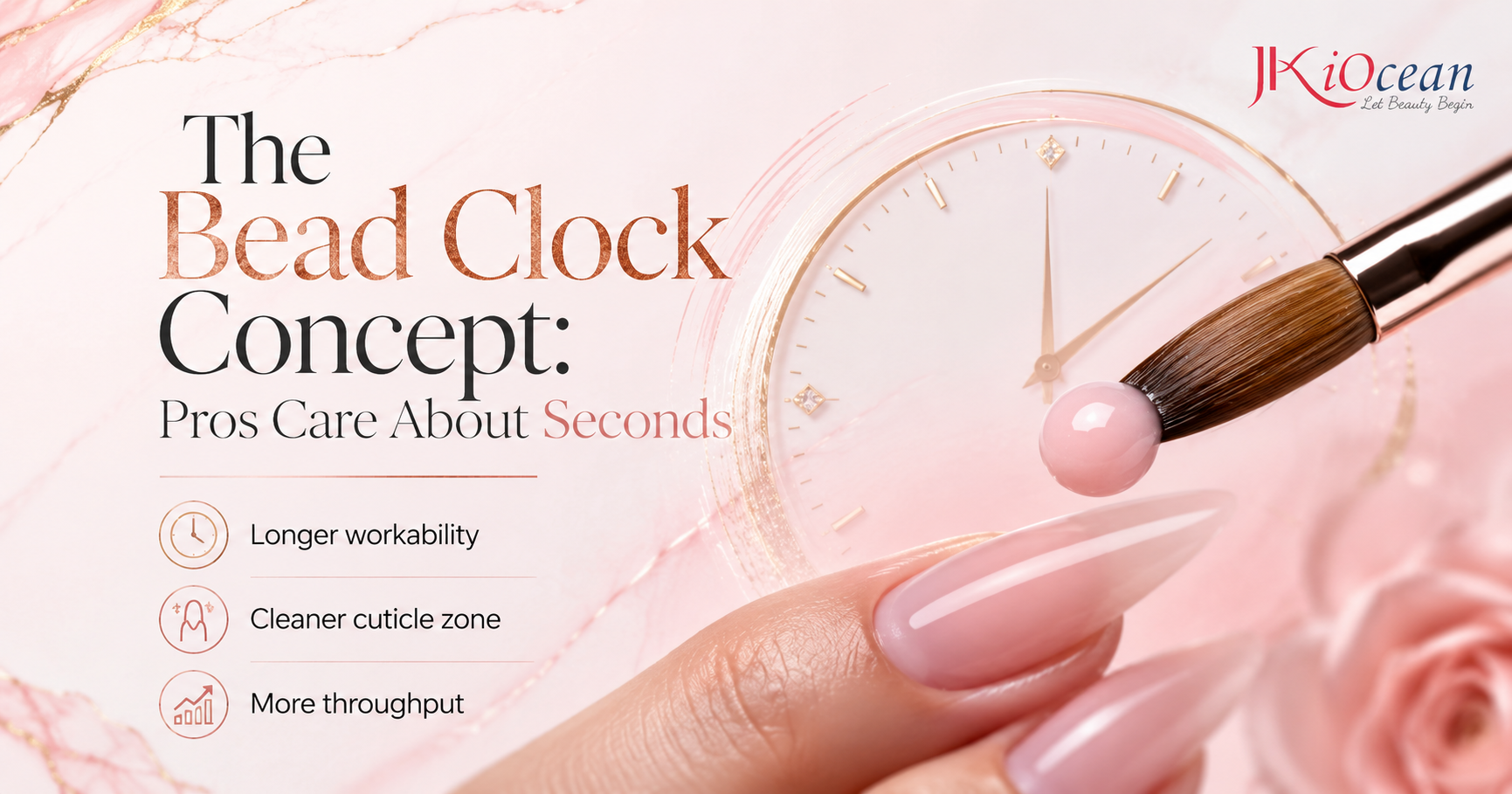
Acrylic is timing. You pick up a bead and you have a short window where it’s perfect: not runny, not grainy, still blendable. Pros often talk about “workability” like it’s a personality trait of the product—but your brush influences that window, too.
Kolinsky hair typically holds monomer more evenly. That means:
-
beads stay workable longer
-
you can place, press, and feather without rushing
-
the cuticle zone gets cleaner because you’re not panicking
In a salon, those seconds add up to minutes per set. That’s not just comfort. That’s throughput.
The Three “Invisible” Performance Advantages Pros Feel Immediately
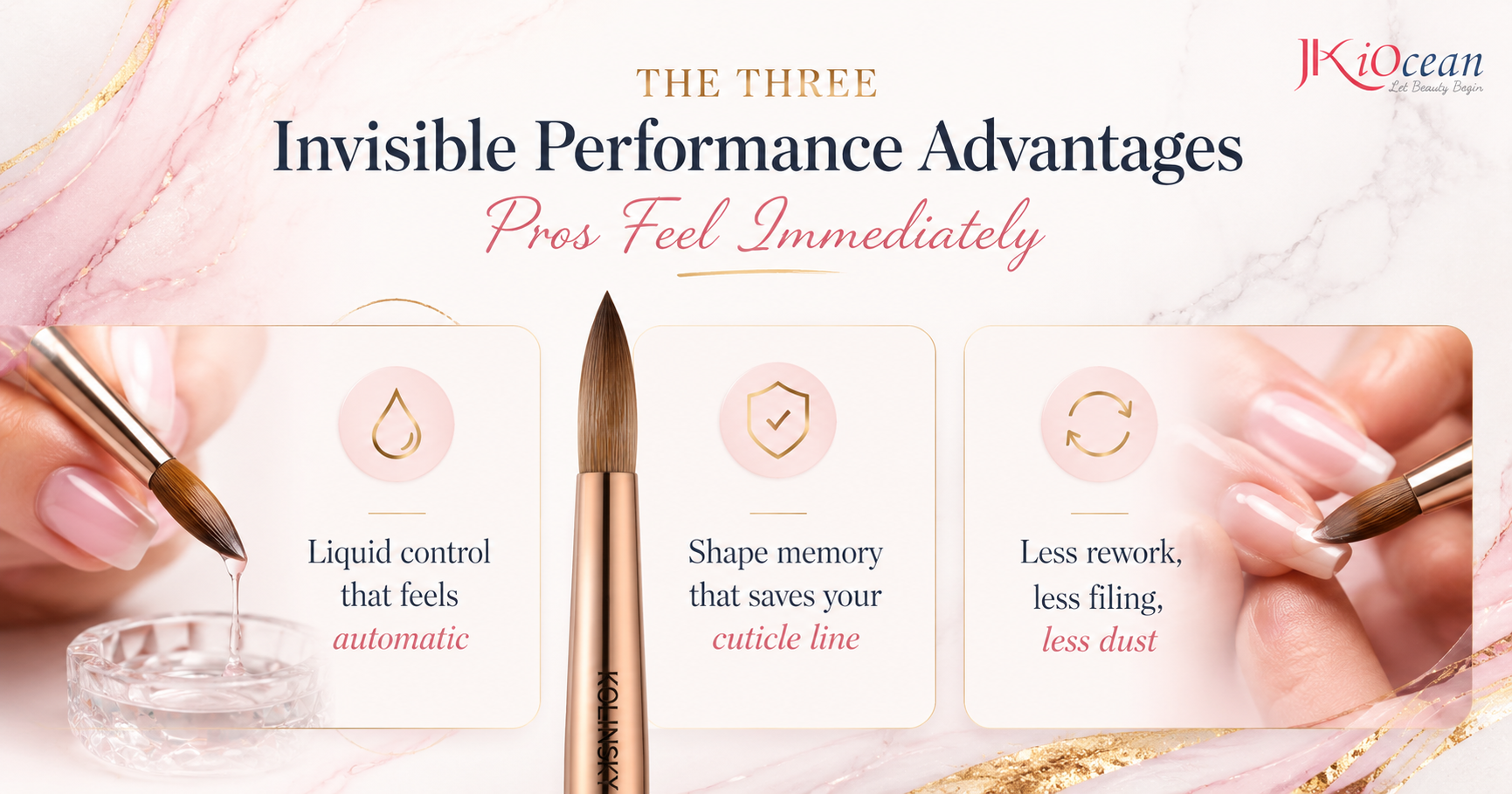
Liquid control that feels automatic
Acrylic application becomes smoother when the brush holds monomer in a stable way. Many techs prefer Kolinsky because it reduces the “surprise factor” in bead consistency. When your brush behaves predictably, you can focus on architecture and blending—not survival.
Shape memory that saves your cuticle line
A big reason pros love Kolinsky is shape memory: the brush returns to a clean point after you press and glide. A stable point helps you feather near the cuticle with less risk of flooding the skin.
When a brush tip starts splitting or curling, the cuticle area is usually where your set starts looking “not crisp.” Kolinsky tends to hold its point longer—assuming proper care.
Less rework, less filing, less dust
Here’s the unglamorous truth: many pros choose tools based on finishing time. If a brush lays acrylic smoother, you file less. Less filing means:
-
faster appointments
-
less dust in the air
-
fewer heat moments on the natural nail
-
a cleaner final surface that looks more “expensive”
Even a small reduction in rework is huge across a full day of clients.
Why Kolinsky Often Wins in Busy Salon Conditions
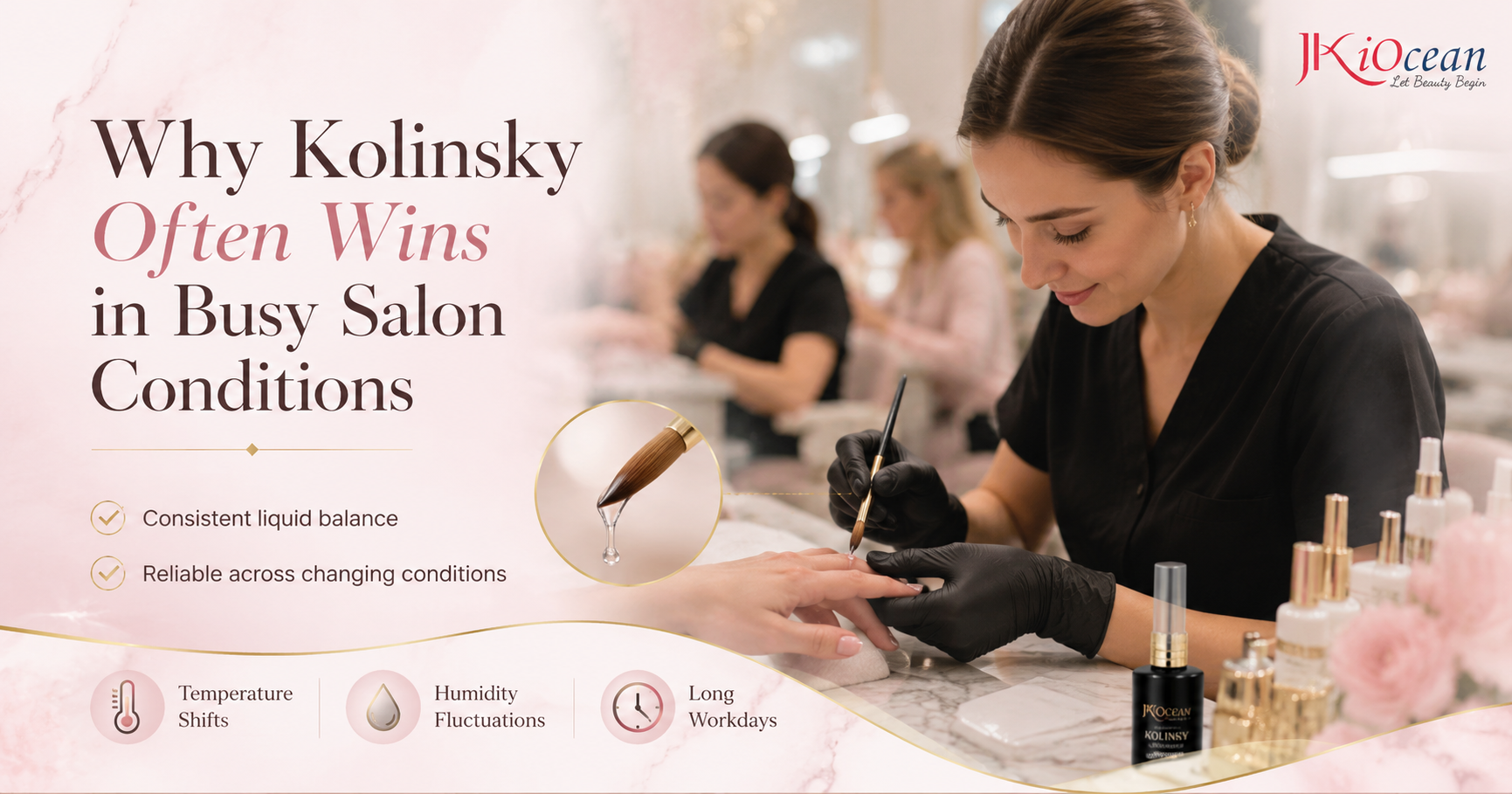
Salon reality is not a controlled lab. You have:
-
clients moving their hands
-
different room temps and humidity
-
different monomer brands
-
long shifts that fatigue your hand
A brush that behaves consistently helps you stay consistent.
Professionals often report that Kolinsky handles these variables better because the hair naturally balances liquid uptake and release. That translates to smoother bead pickup across changing conditions.
The “Point + Belly” Combo: What Pros Actually Buy
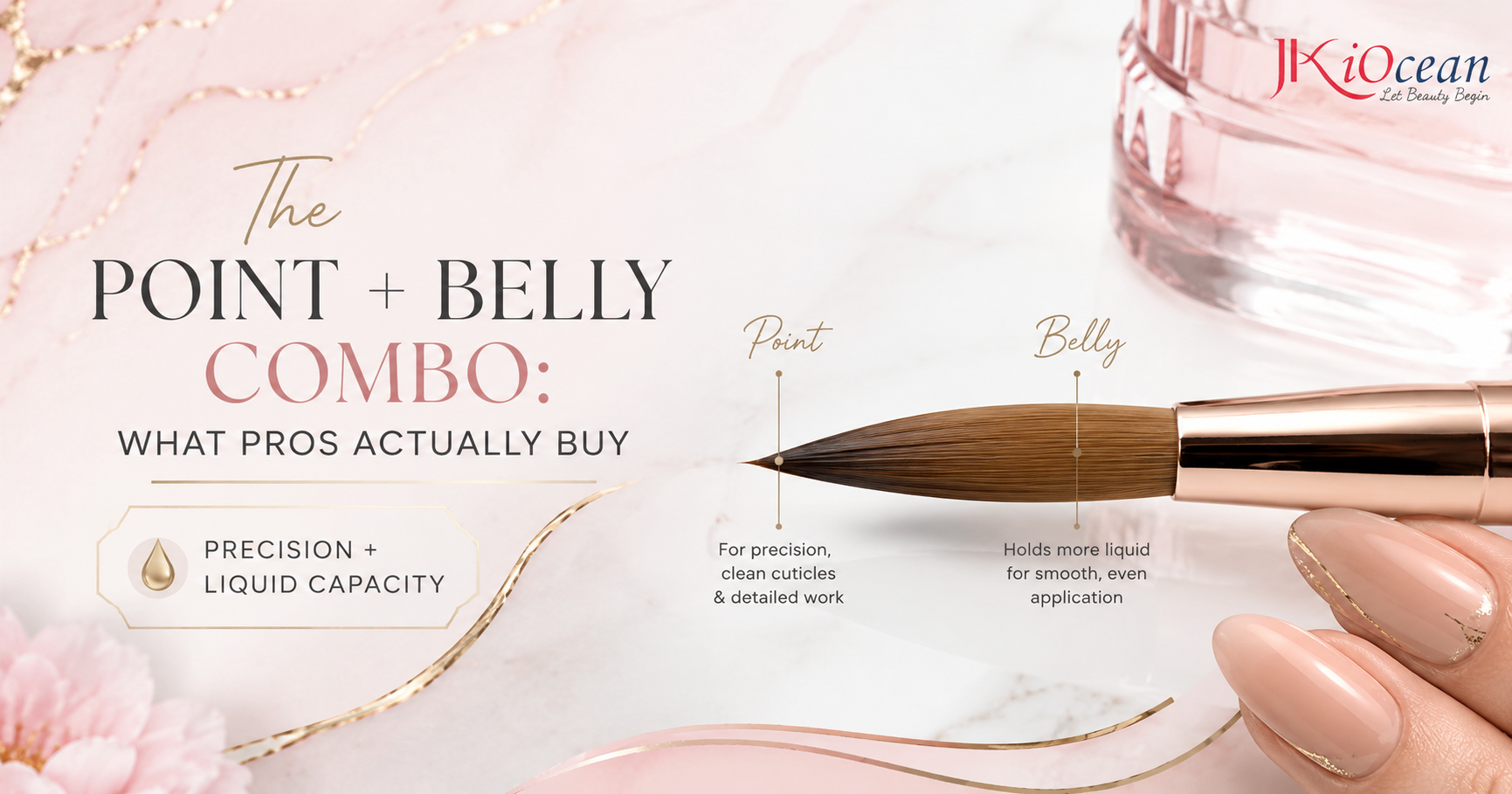
When pros evaluate an acrylic brush, they’re looking for two features working together:
-
Point: precision for cuticle line and sidewalls
-
Belly: capacity to hold monomer so beads don’t dry too fast
Kolinsky brushes tend to have a well-formed belly while still keeping a sharp point. This combo is why many techs can do fewer dips per nail and still keep control.
If you ever feel like you’re dipping into monomer every ten seconds, your brush belly may be too small—or your brush isn’t holding liquid efficiently.
Where Synthetic Brushes Still Make Sense (Yes, Really)
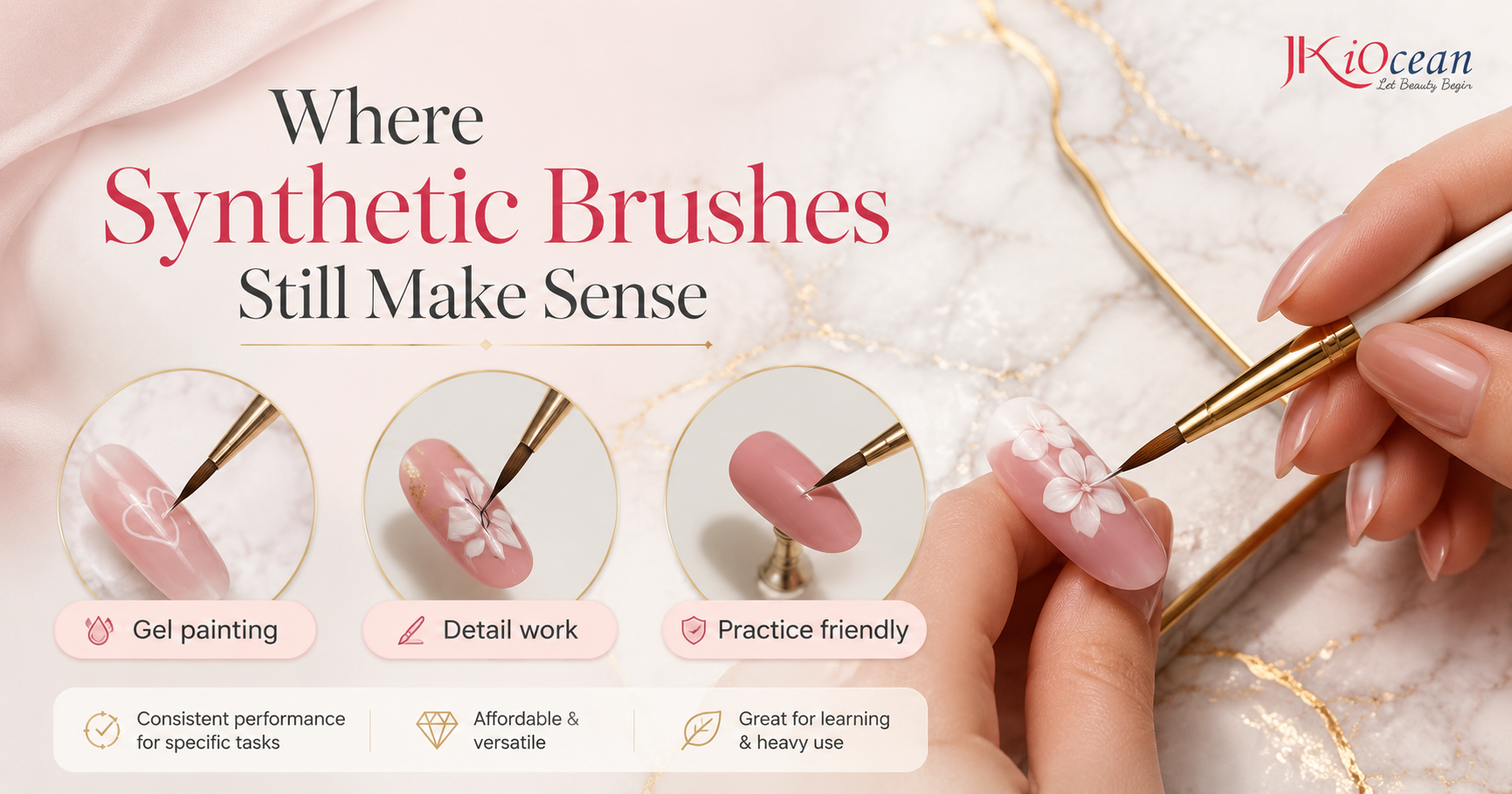
Professional doesn’t always mean “Kolinsky only.” There are times synthetics are practical or even better.
Gel painting and detailed nail art
For gels, many synthetic brushes perform extremely well because gel behaves differently than monomer and powder. A firm synthetic liner can be perfect for crisp line art.
Learning phase and heavy practice
If you’re practicing a lot and you tend to be hard on tools, a decent synthetic brush can be a cost-effective stepping stone. It lets you learn bead ratio and pressure without fear of “ruining an expensive brush” on week one.
Ethical or sourcing concerns
Some nail techs prefer synthetic because of sourcing preferences or regulations in their region. Today, high-quality synthetics have improved, and a skilled tech can still do excellent work with them.
The real point: pros choose the tool that makes sense for the service and the workflow.
The 10-Second In-Store Test Pros Use
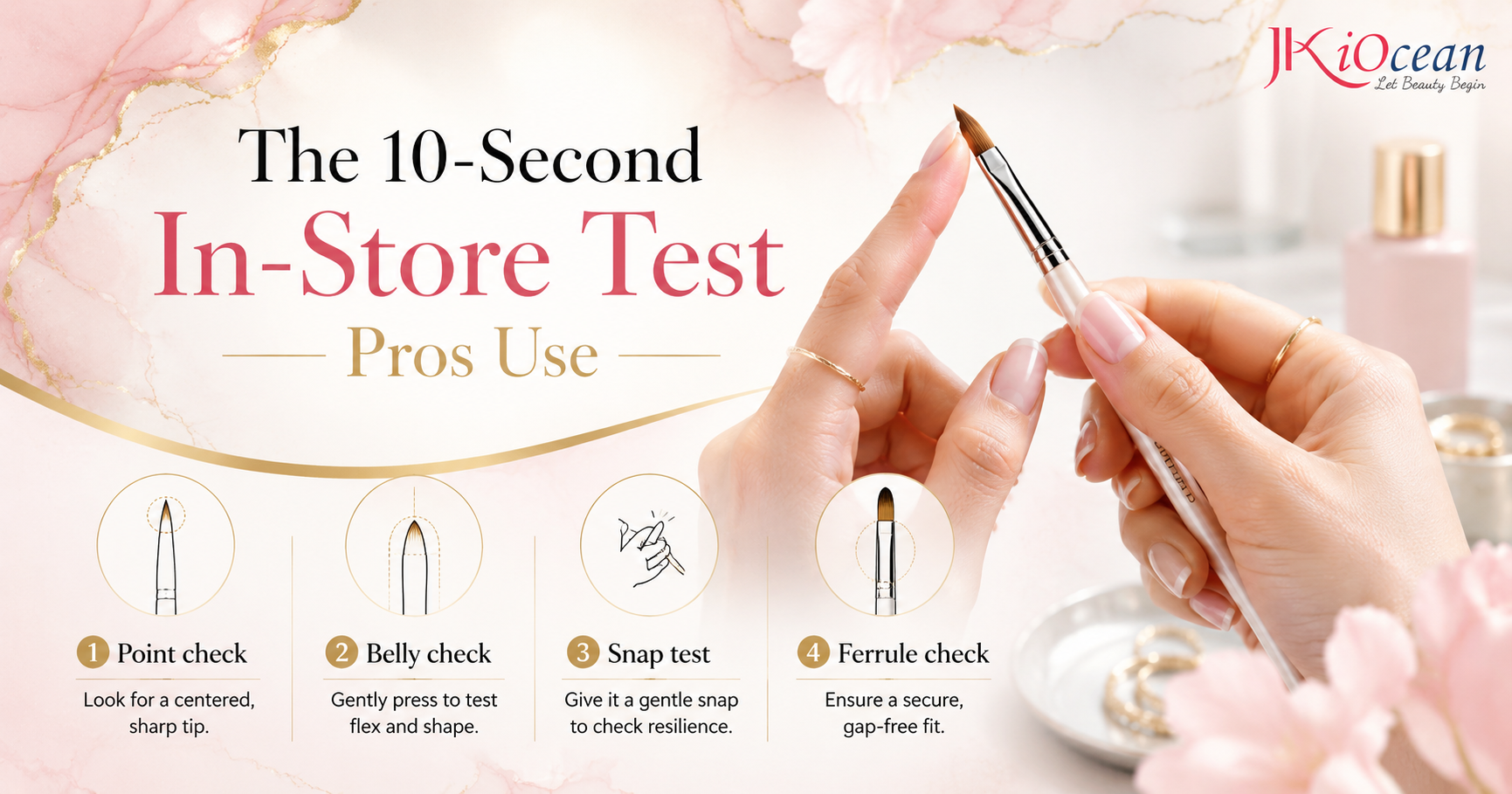
Even without monomer, you can spot quality fast:
-
Point check: Does it form a clean point or a blunt wedge?
-
Belly check: Is there a visible midsection, or is it thin like a paintbrush?
-
Snap test: Press bristles lightly and release. Does it return to shape or stay splayed?
-
Ferrule check: Is it tight and clean with no gaps? A loose ferrule is a future problem.
This test matters more than the label on the handle.
The Biggest Reason Good Brushes “Fail”: Technique, Not Hair Type
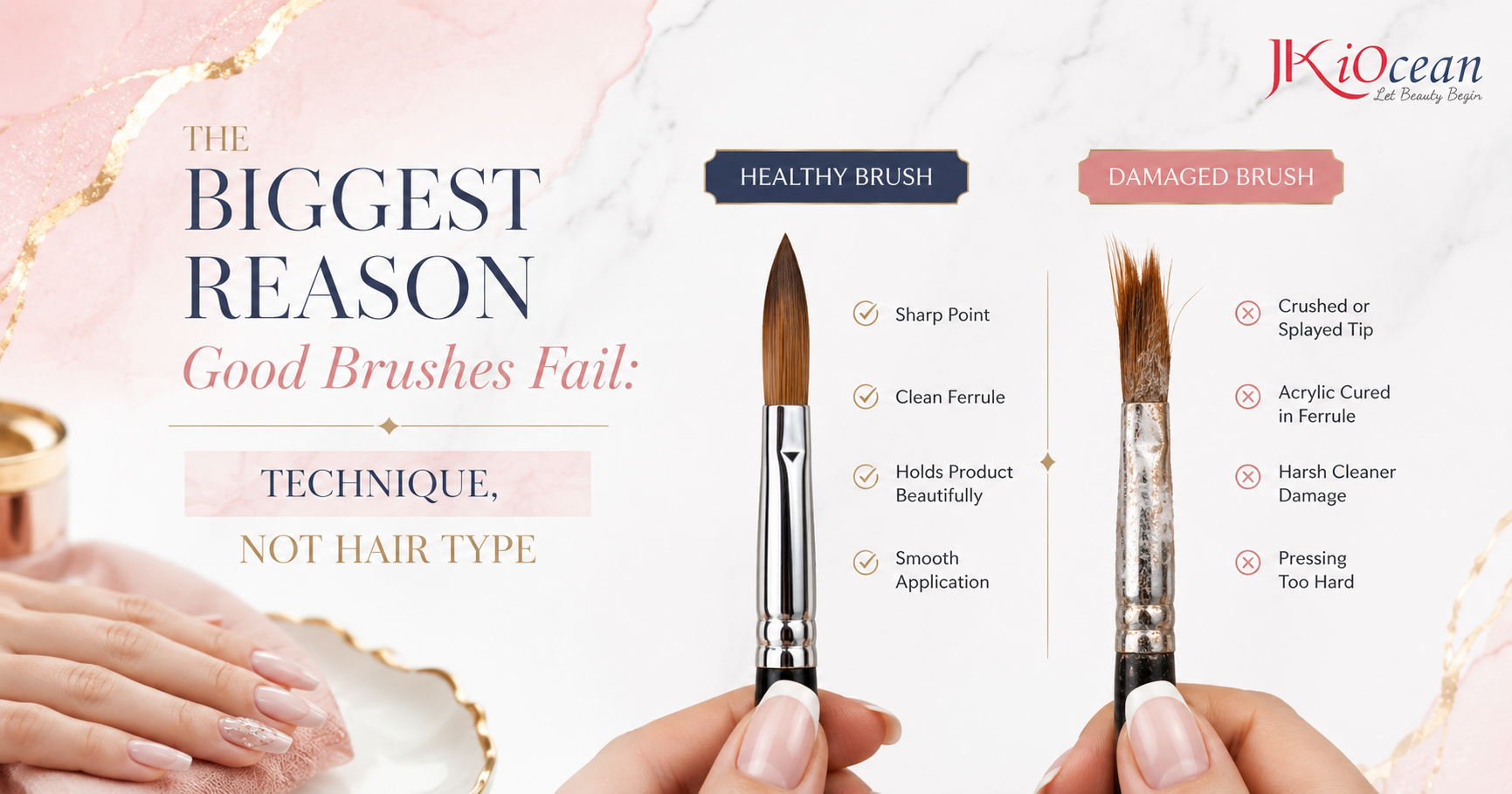
Pros also prefer Kolinsky because they’ve learned how to keep it alive. Most brush deaths come from the same mistakes:
-
forcing acrylic up into the ferrule by pressing too hard
-
letting acrylic cure in the brush while pausing
-
using acetone as a routine cleaner
-
storing brushes uncapped where the tip gets crushed
Kolinsky is high performance, but it’s not forgiving if you treat it like a disposable tool.
A Pro Cleaning Habit That Protects Any Brush
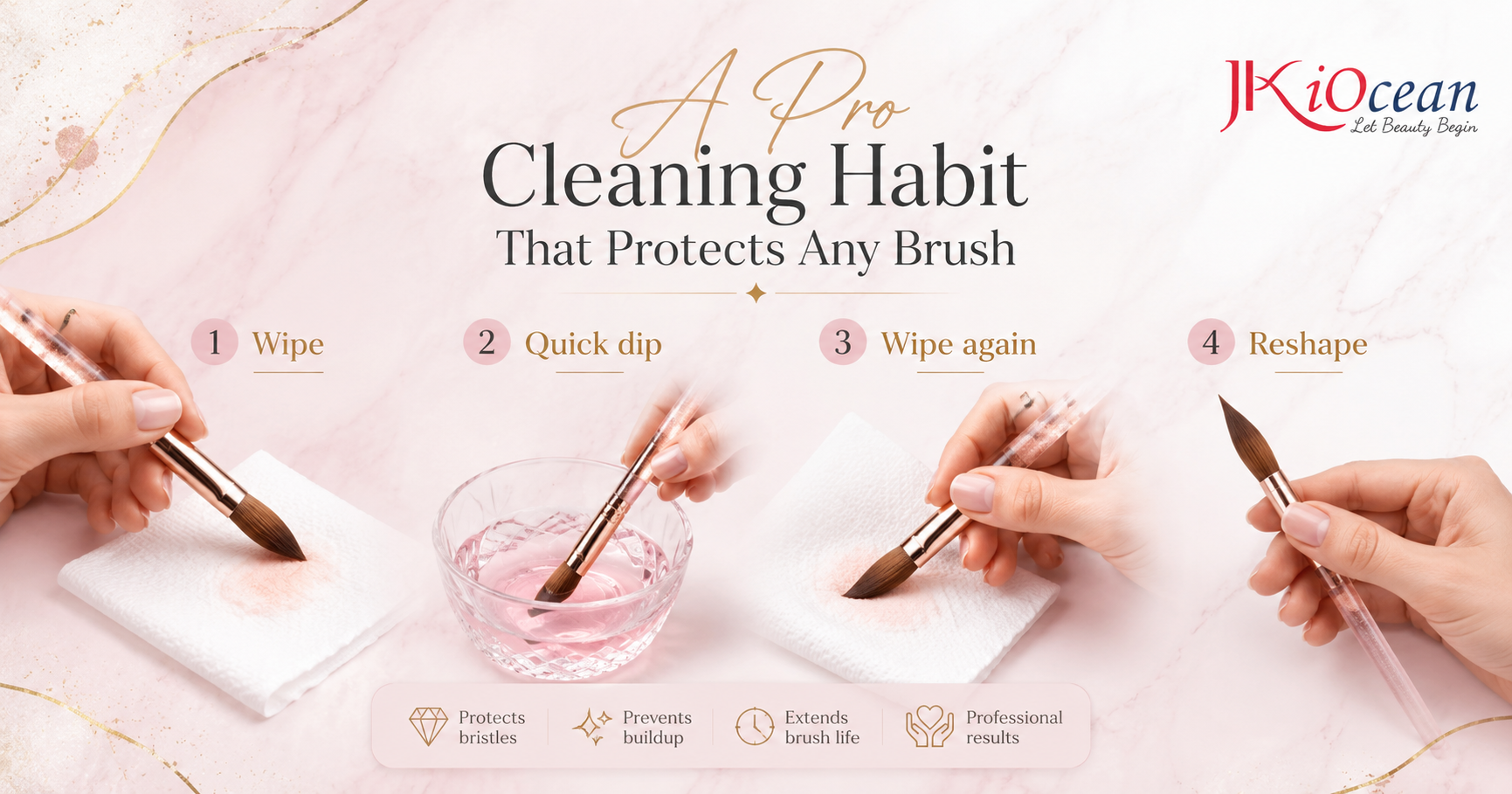
The “between-beads” routine most experienced techs use:
-
wipe on lint-free pad
-
quick dip in clean monomer
-
wipe again
-
reshape to point
It takes seconds, and it prevents hardening. If you do this consistently, your brush stays soft and your work stays smoother.
What Size Do Pros Prefer (and Why It’s Not One-Size-Fits-All)
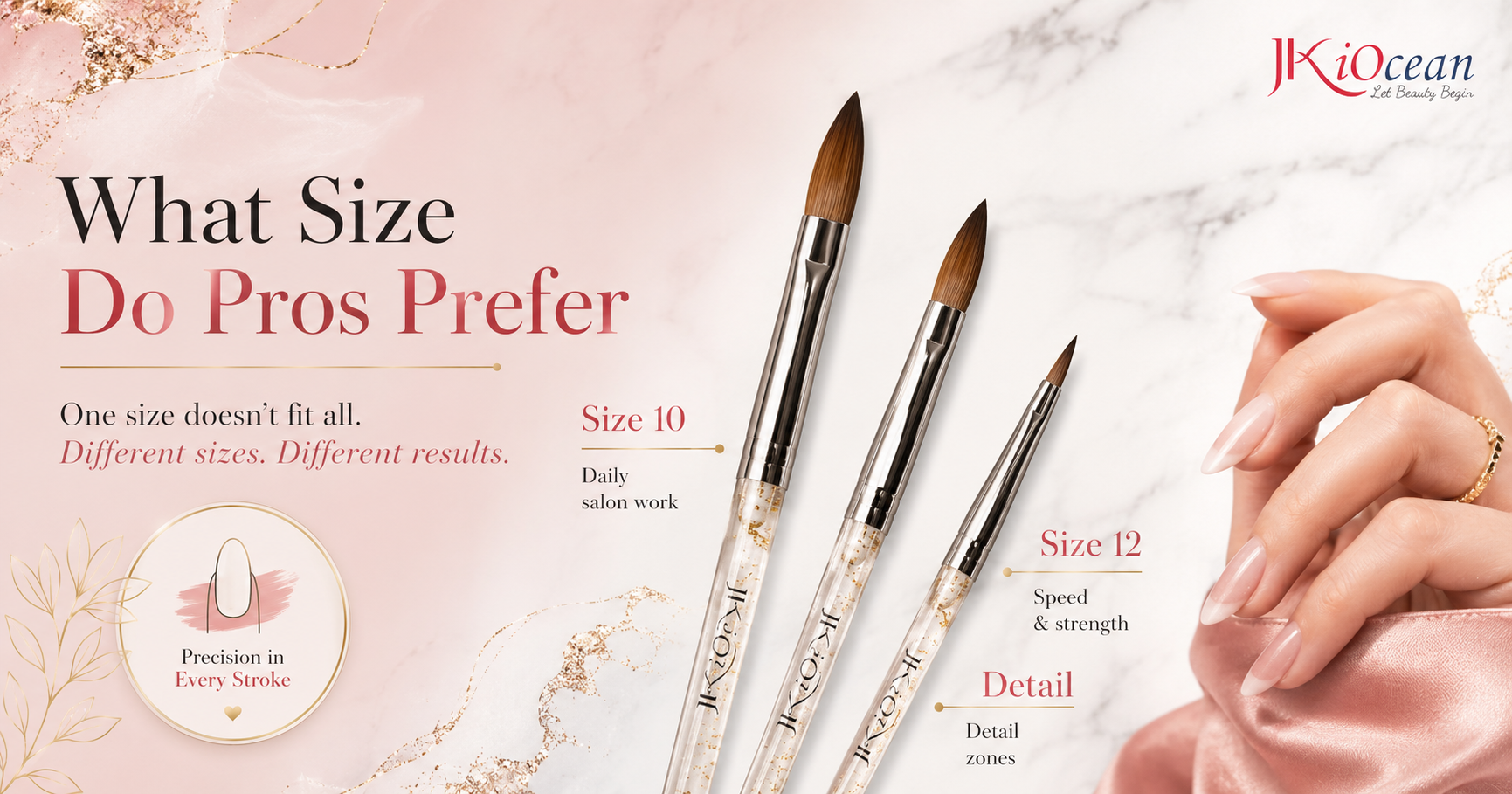
You’ll see many pros using sizes around:
-
10–12 for daily salon work
-
larger sizes for speed or long nails
-
smaller sizes for detail zones and small nail beds
Pros pick size based on bead volume and the style of work they do most. If most of your clients are short-to-medium length sets, a mid-size brush covers efficiently without losing control.
The Bottom Line: Pros Prefer Predictability
Professional nail techs prefer Kolinsky brushes because the brush helps them:
-
keep bead consistency under pressure
-
create cleaner cuticle blends
-
reduce rework and filing
-
work faster with less stress
It’s less about status, and more about predictable performance in a real salon day.
If you do acrylic regularly, Kolinsky often feels like the brush is “helping” you instead of fighting you. If you do mostly gel art, or you want a low-stress practice brush, synthetic can still be a smart call.
Quick FAQs
Do Kolinsky brushes automatically make acrylic easier?
They can improve control, but bead ratio and pressure still matter. Think of it as removing friction, not replacing skill.
Is Kolinsky only for advanced techs?
Not necessarily. Many beginners learn faster with a stable brush, as long as they keep it clean and don’t use harsh solvents.
Can I clean Kolinsky with acetone?
Avoid it for routine cleaning. Monomer is safer for maintaining hair quality and shape.
Why does my brush splay after a few weeks?
Most commonly: product cured near the ferrule, acetone overuse, or tip damage in storage.