
 3D Gel
 Accessories
 Acrylic Brushes
 Art Brushes
 Clippers
 Design
 French Brushes
 Builder Gel
 Nail Tip Cutter
 Nippers
 Pusher
 Scissors
 Tweezers
May
Blogs
Kolinsky vs Synthetic Nail Brush: Which One Actually Makes Your Work Better?
If you are comparing Kolinsky vs Synthetic nail brush, you are probably trying to solve a real problem, not chase a trend. Maybe your acrylic beads keep drying too fast. Maybe your brush tip splits after a week. Maybe you are not sure if paying more for Kolinsky is worth it when synthetic brushes are everywhere.
This guide is written to help you decide based on performance, not marketing. You will learn what changes in real application, how to test a brush quickly, which brush type fits your skill level, and how to avoid the mistakes that ruin both Kolinsky and synthetic brushes.
The big difference in one sentence
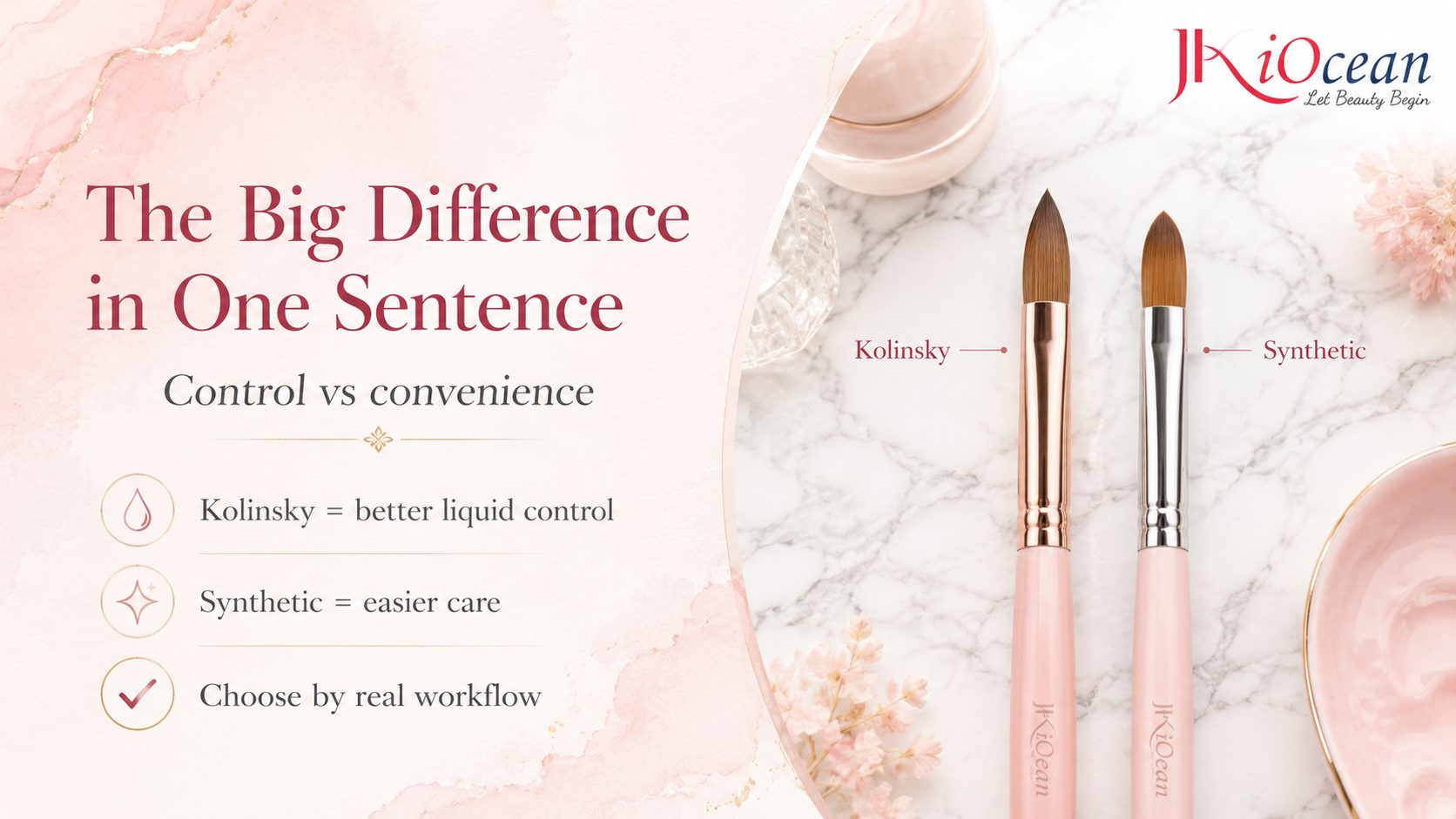
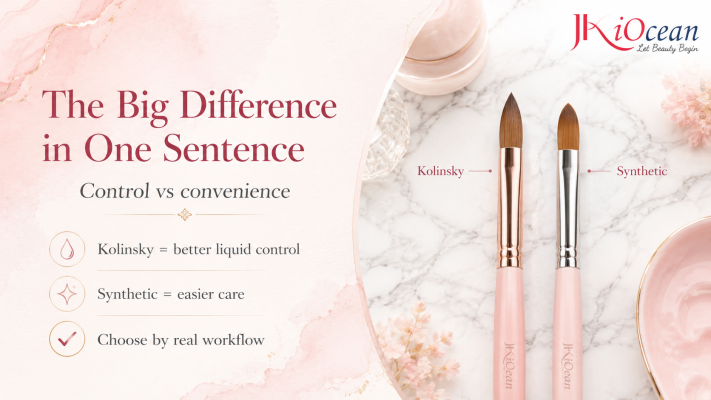
A Kolinsky brush generally gives you better liquid control and shape memory, while a synthetic brush often gives you easier maintenance and lower upfront cost.
That sounds simple, but the details matter because brush behavior affects bead consistency, cuticle blending, filing time, and even how confident you feel during a set.
What Kolinsky really means in nail work
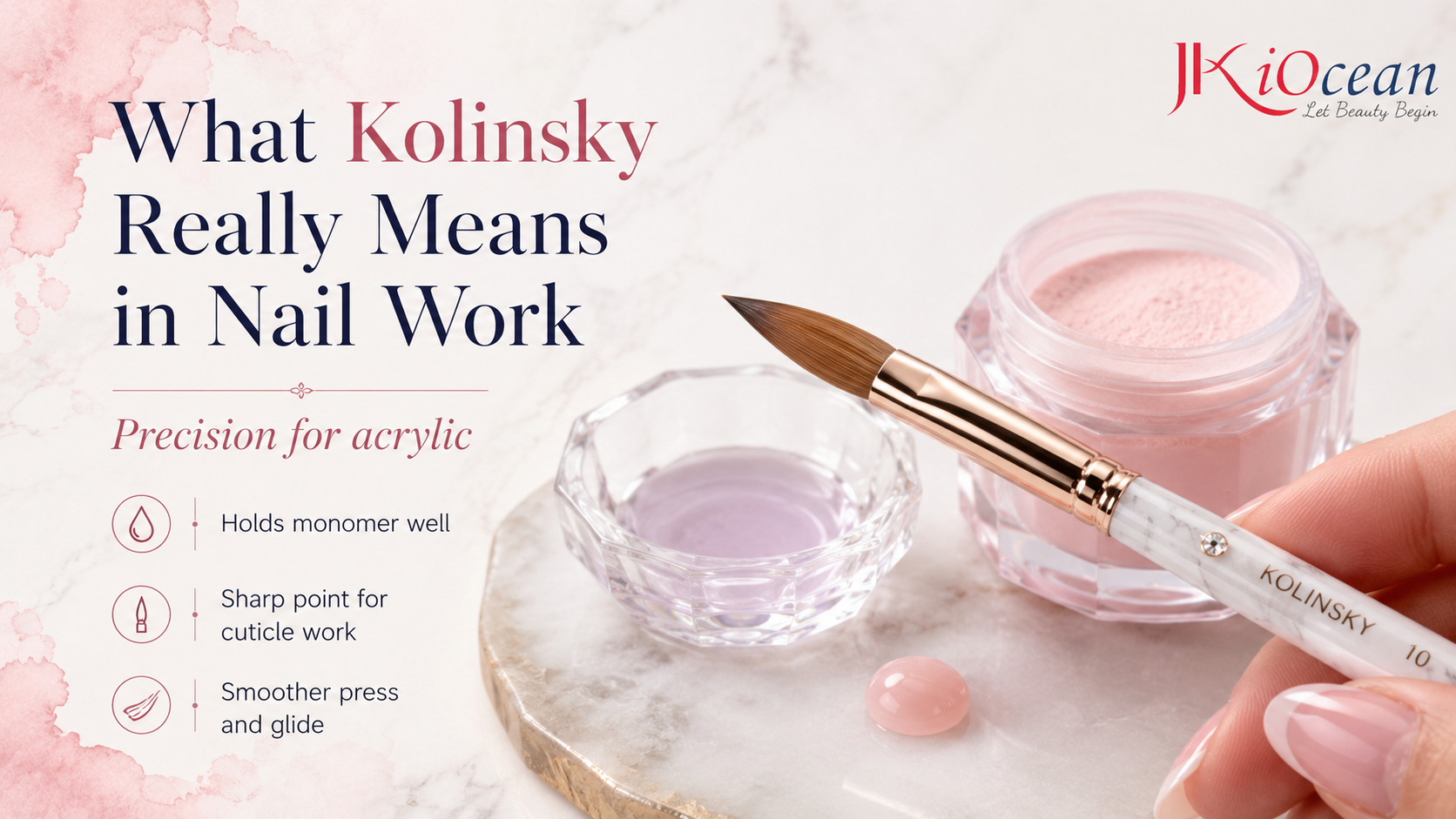
Kolinsky is a natural hair commonly used for acrylic brushes because it holds monomer well and returns to a point after you press and glide. In practice, this means:
-
Your bead stays workable longer
-
Your brush stays pointed for cleaner cuticle work
-
You can blend without dragging the product
A good Kolinsky brush does not make you a better nail tech overnight. But it can make technique feel more predictable, which speeds learning and improves consistency.
What synthetic nail brushes are designed to do
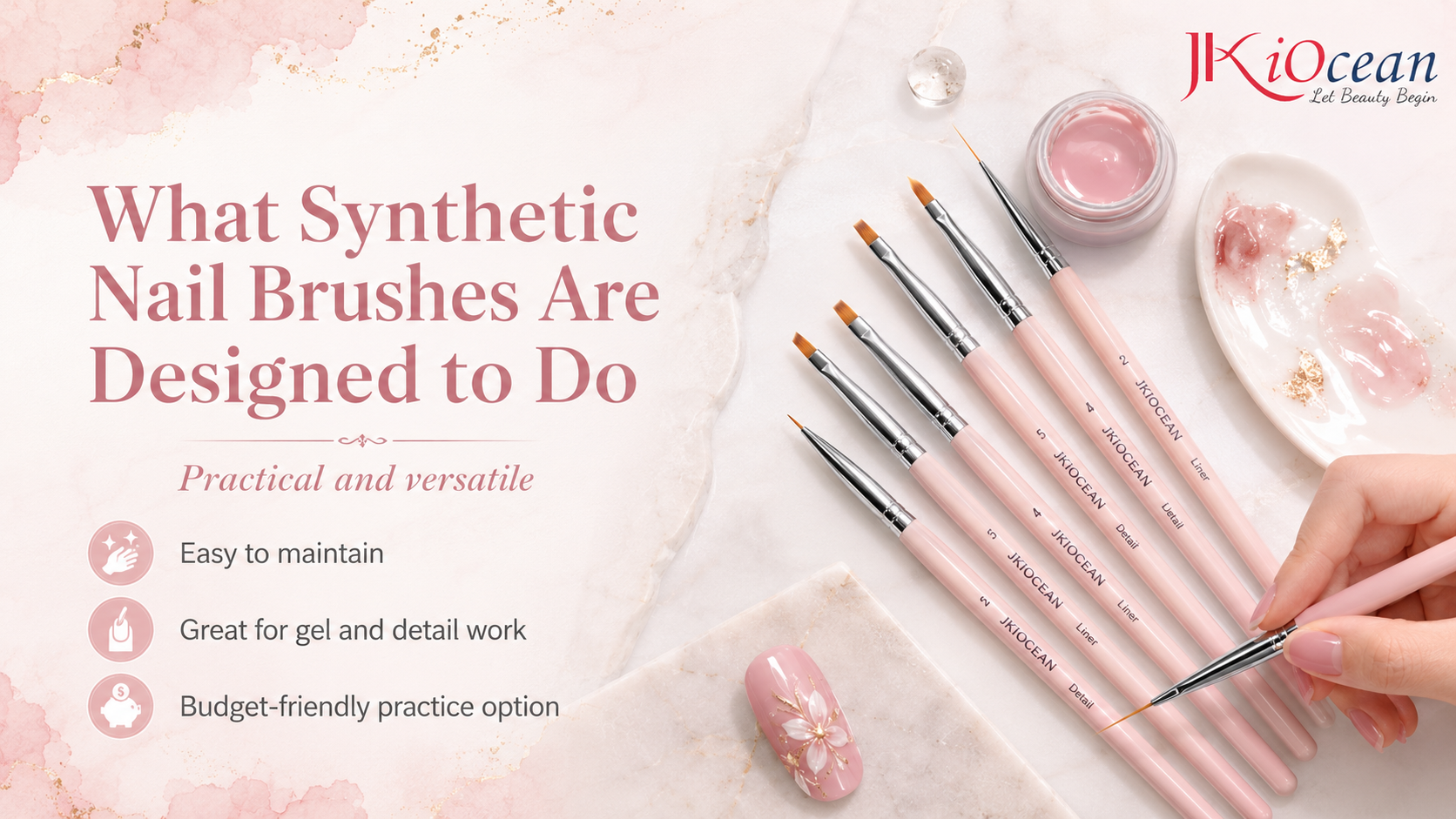
Synthetic nail brushes are made from nylon or similar fibers. Many are designed to resist staining and to be easier to clean. They can be great for:
-
Practice sessions where you want low cost replacements
-
Gel work, painting gels, and detailed nail art where product is thicker
-
Nail techs who are rough on tools and want less stress about damage
Synthetic brushes vary widely in quality. A good synthetic brush can outperform a poor Kolinsky brush. The label alone is not the full story.
Performance comparison that actually matters in acrylic
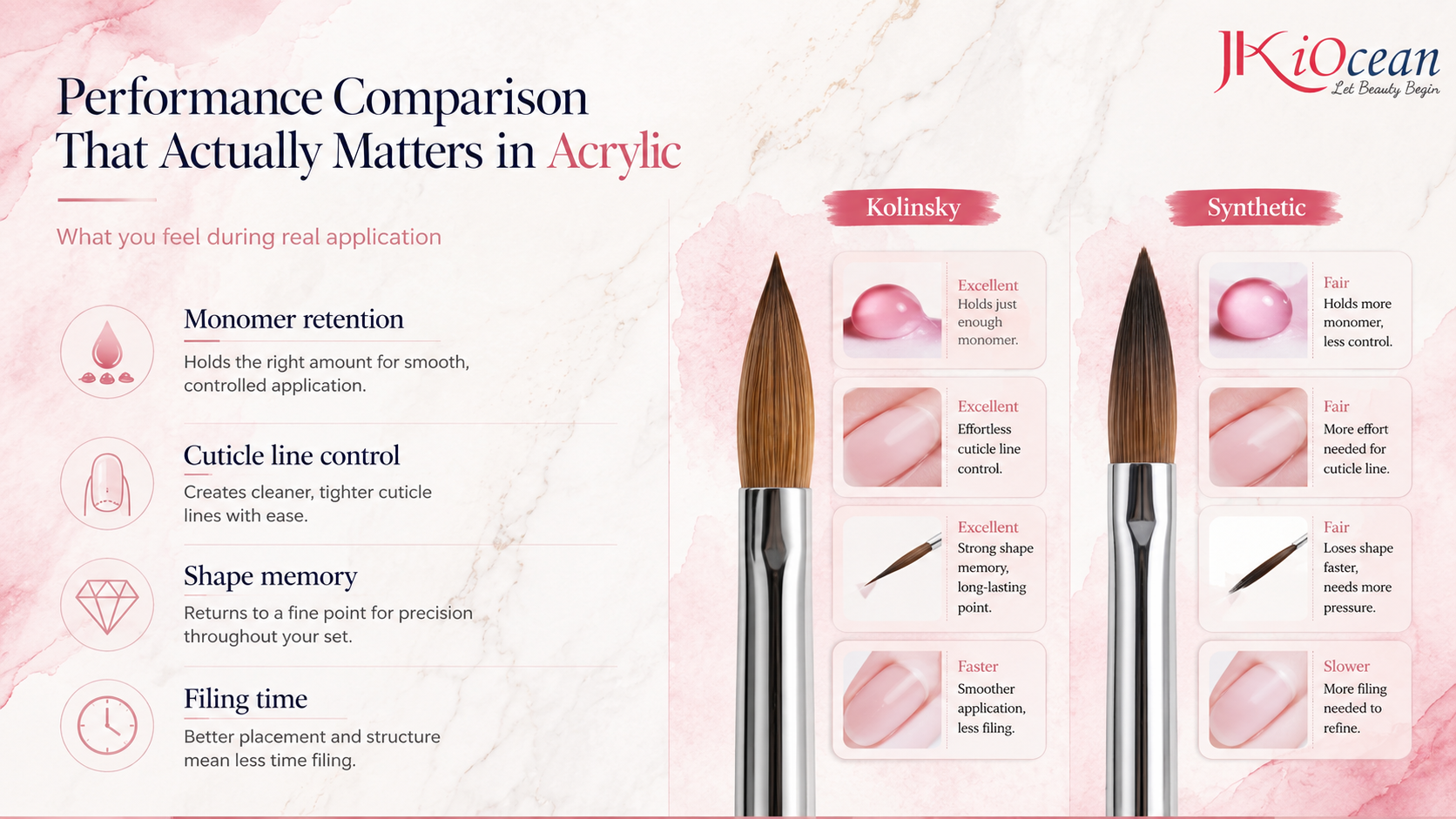
If you do acrylic, these are the four areas where you will feel the difference first.
Monomer retention and bead consistency
Kolinsky typically holds monomer in a more balanced way. This helps you pick up beads that are not too wet and not too dry. Synthetic brushes can feel slightly more slippery or less absorbent, which can make beads dry out faster, especially in warm rooms.
If you struggle with chalky beads, Kolinsky often makes life easier. If your beads are always too wet and running, the problem may be loading technique rather than brush type.
Cuticle line control
Clean cuticle blending is where many beginners lose time. Kolinsky hairs tend to keep a sharper point for longer, which makes it easier to feather acrylic near the cuticle without flooding skin. Synthetic tips can curl or split sooner, making the cuticle area harder to refine.
Shape memory and splaying
A brush that splays turns every stroke into a fight. Kolinsky usually has better snap and returns to shape after pressing. Synthetic can be springy, but some synthetics lose their shape quickly if cleaned incorrectly or if you press too hard during placement.
Filing time after application
This is the hidden cost. If a brush drags, leaves texture, or causes uneven placement, you file more. A brush that lays acrylic smoother reduces finishing time. Many techs justify Kolinsky because it can reduce filing and rework, not because it looks premium.
A quick decision path you can use today
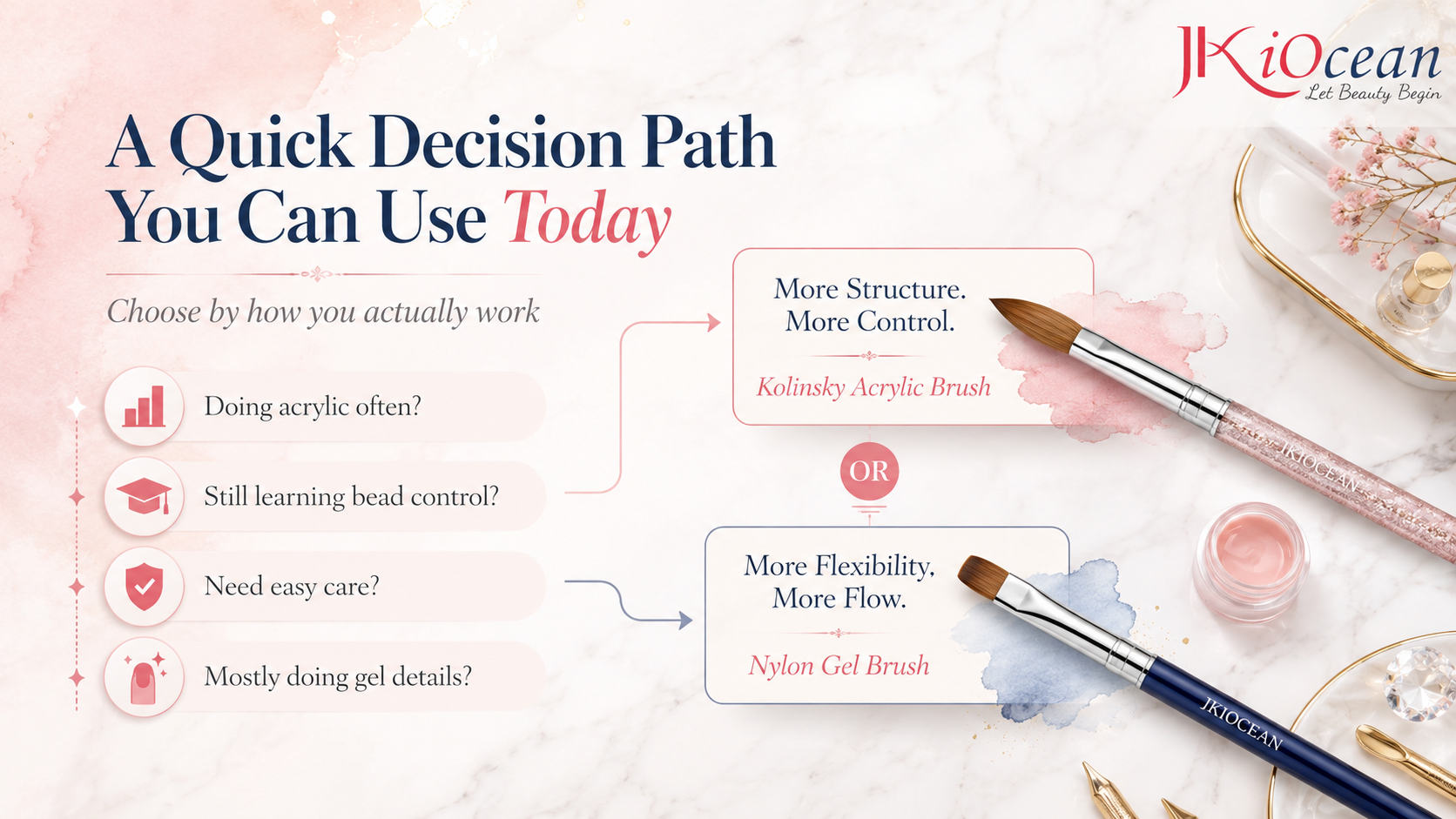
Ask yourself these questions.
Are you doing acrylic every week or every day?
If yes, Kolinsky often pays for itself through better control and fewer brush replacements. If you only do acrylic occasionally, synthetic may be enough.
Are you still learning bead control?
If yes, choose the brush that gives you the most control. Often that is a medium size Kolinsky, but a high quality synthetic can work if you are consistent with cleaning and loading.
Do you prioritize easy care over maximum performance?
If yes, synthetic is more forgiving. Kolinsky can last longer, but only if you care for it correctly.
Are you mostly doing gel nail art, liners, and details?
If yes, many synthetics perform extremely well. Kolinsky is not automatically better for every gel task.
How to test a brush in under one minute
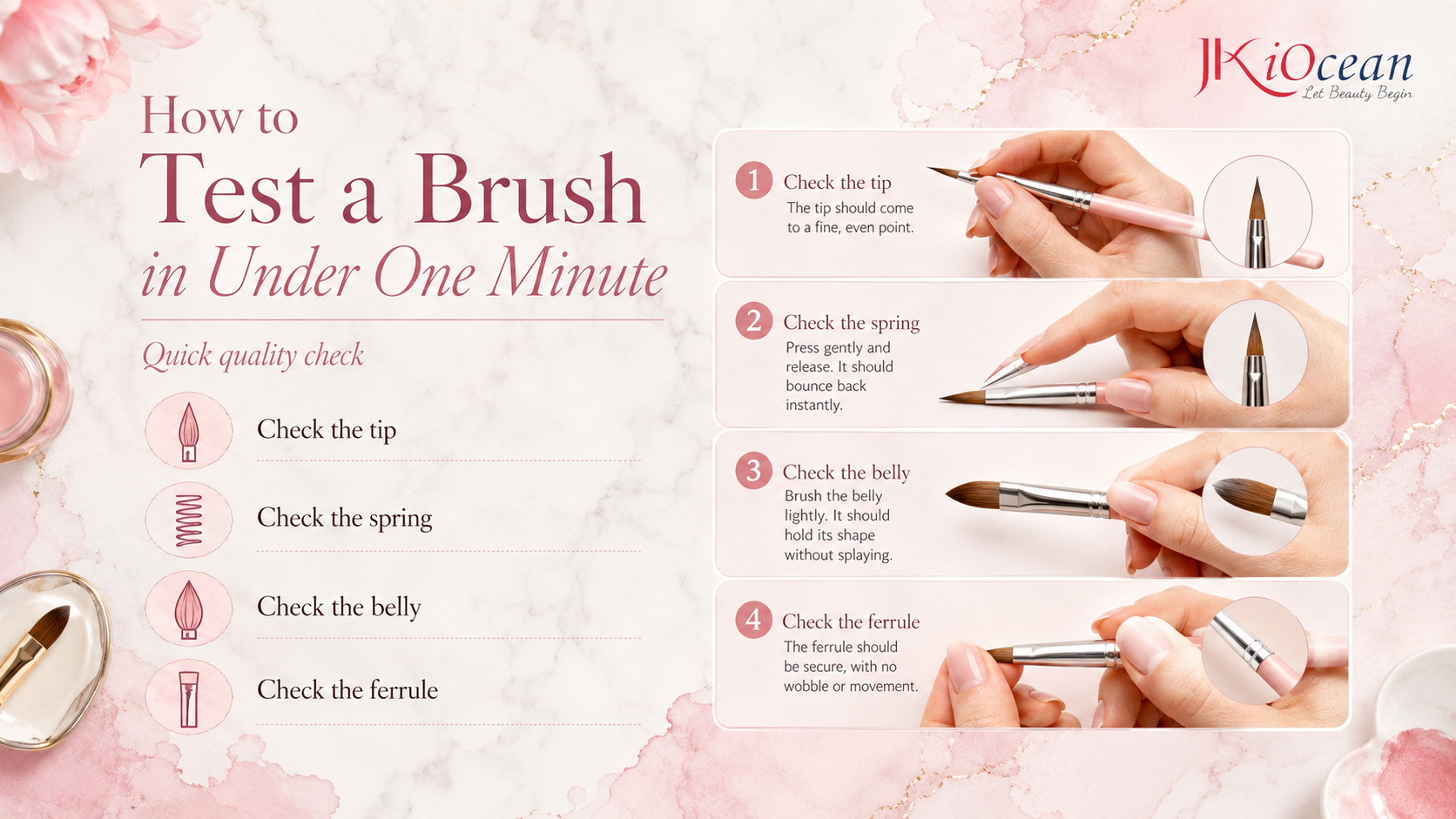
Even without monomer, you can evaluate brush quality.
-
Look at the tip. It should form a clean point, not a blunt wedge.
-
Press the bristles lightly and release. The hair should return to shape without permanent splay.
-
Check the belly. A real acrylic brush needs a visible belly because that is what holds liquid.
-
Inspect the ferrule. It should be tight and clean. A loose ferrule is a future dead brush.
If a brush fails these tests, the material type does not matter. It will still frustrate you.
Which one is better for beginners
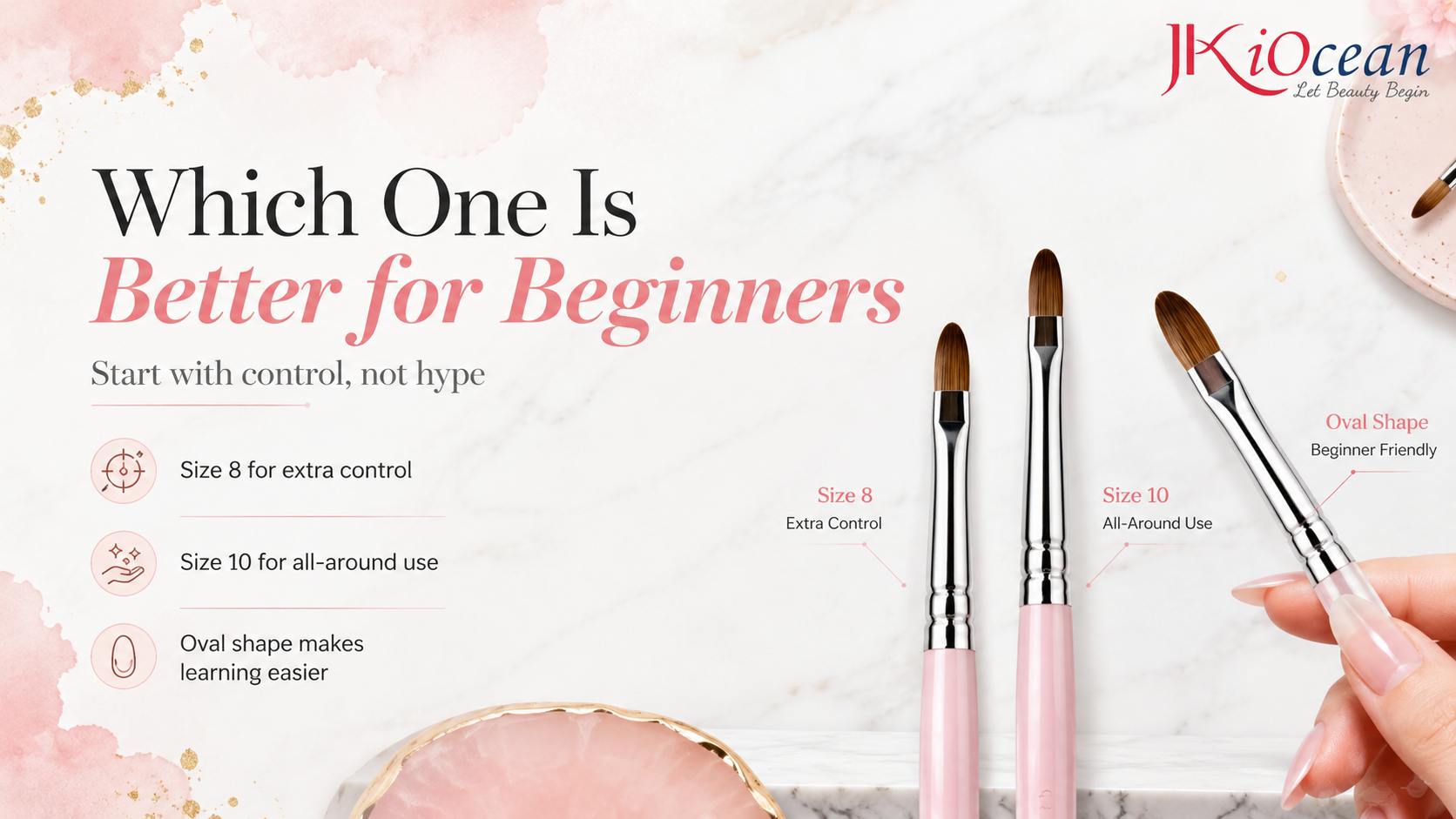
For beginners, the best brush is the one that improves control and reduces panic.
A practical beginner setup looks like this:
-
Size 8 if you have small nail beds and want maximum control
-
Size 10 if you want a true all around brush for practice and real sets
-
Oval shape for the easiest cuticle blending and sidewall control
Beginners often buy a brush that is too large because it looks professional. Large brushes require bead discipline. Start smaller and move up when you can place and blend consistently.
The part people forget: brush care decides everything
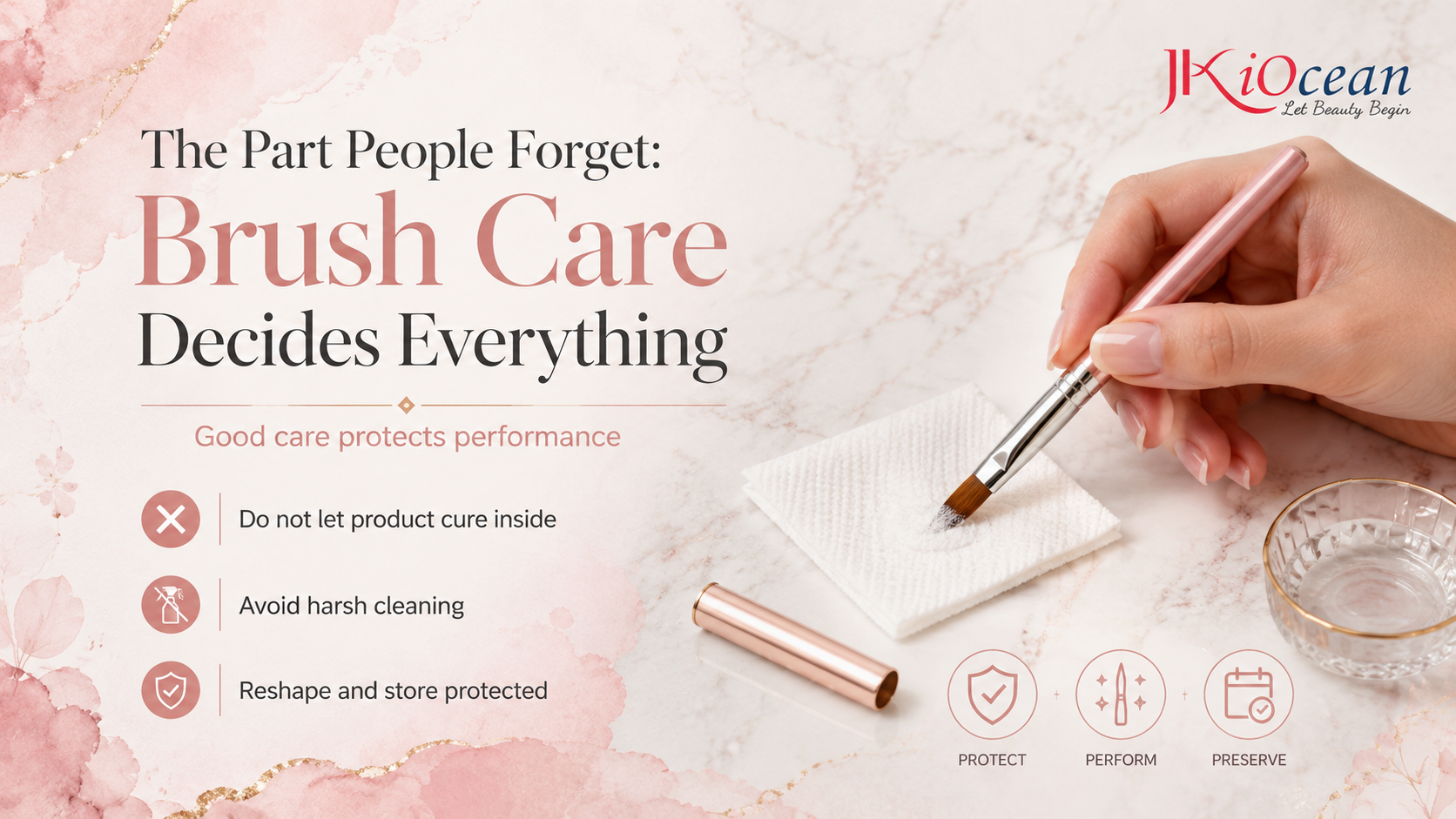
Many “bad brush” stories are actually “bad care” stories. Here is what ruins brushes fast.
What ruins Kolinsky
-
Using acetone regularly on the bristles
-
Letting acrylic cure inside the brush
-
Storing the brush crushed in a drawer
-
Forcing product deep into the ferrule with heavy pressure
What ruins synthetic
-
Leaving gel residue near a UV lamp so it partially cures
-
Scrubbing aggressively on wipes and fraying the tip
-
Cleaning with harsh solvents that harden the fibers
-
Using one brush for everything and contaminating it with glitter or pigment
A simple habit that helps both types: wipe, dip briefly in the correct liquid, wipe again, reshape the point, and store protected.
Cost of ownership, not just price
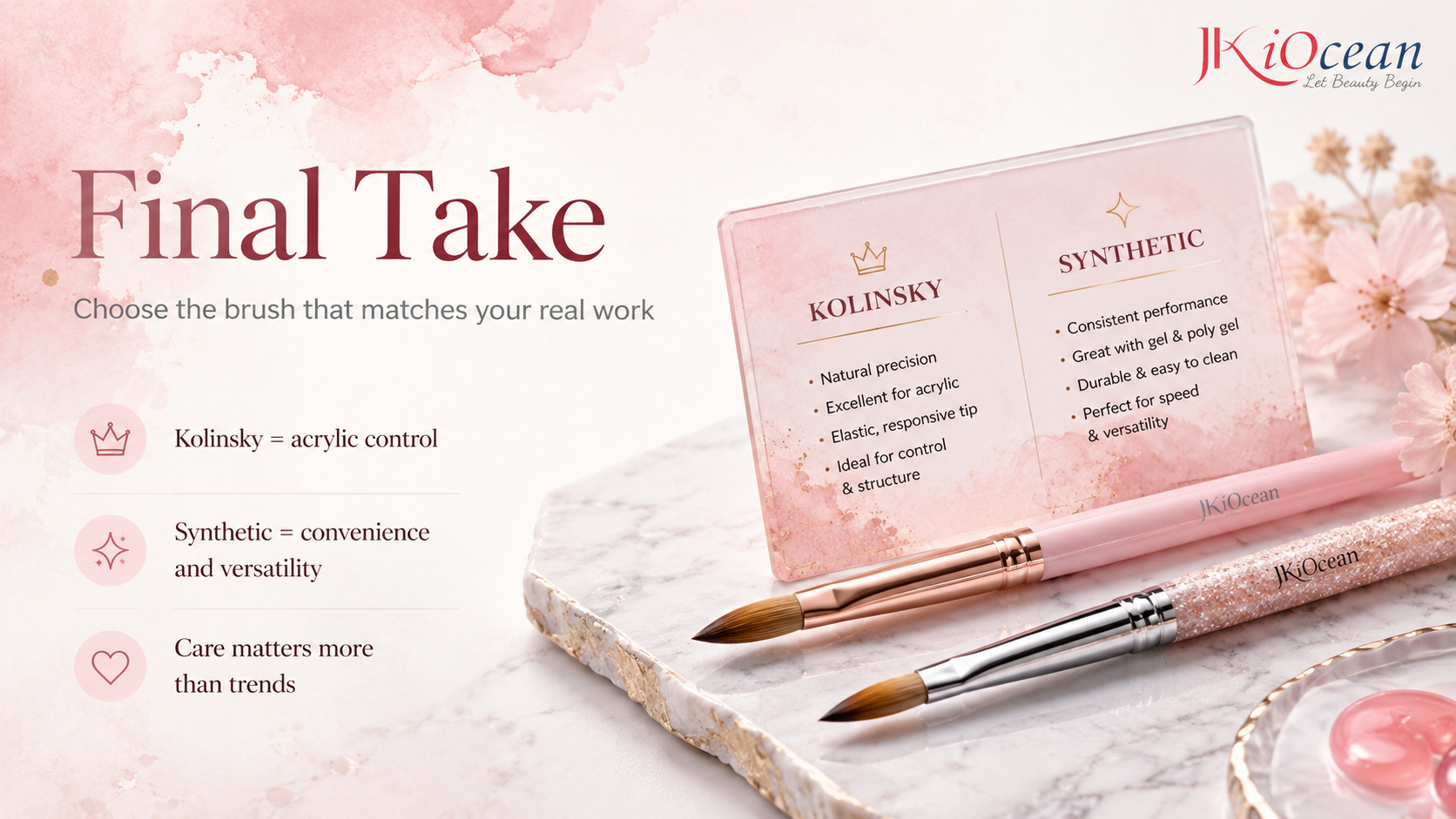
Kolinsky often costs more upfront, but can be cheaper long term if it lasts and reduces rework. Synthetic is cheaper upfront and often easier to replace, but may lead to more frequent switching if the tip loses shape quickly.
The smarter question is not “which is cheaper” but “which gives me predictable results with the least frustration.”
In the Kolinsky vs Synthetic nail brush choice, Kolinsky usually wins for acrylic control, cuticle blending, and shape memory. Synthetic often wins for convenience, lower cost, and strong performance in gel and detail work.
If you do acrylic frequently and care about consistency, Kolinsky is often worth it. If you are practicing, doing mixed services, or want a lower stress option that still performs, a good synthetic brush can be a solid choice.
The best move is to pick based on what you do most, then maintain the brush like a precision tool. A well cared for brush, regardless of material, will level up your results more than any new trend ever will.