
 3D Gel
 Accessories
 Acrylic Brushes
 Art Brushes
 Clippers
 Design
 French Brushes
 Builder Gel
 Nail Tip Cutter
 Nippers
 Pusher
 Scissors
 Tweezers
May
Blogs
What Is the Difference Between Toenail Clippers and Fingernail Clippers? A Practical Guide You Can Use Today
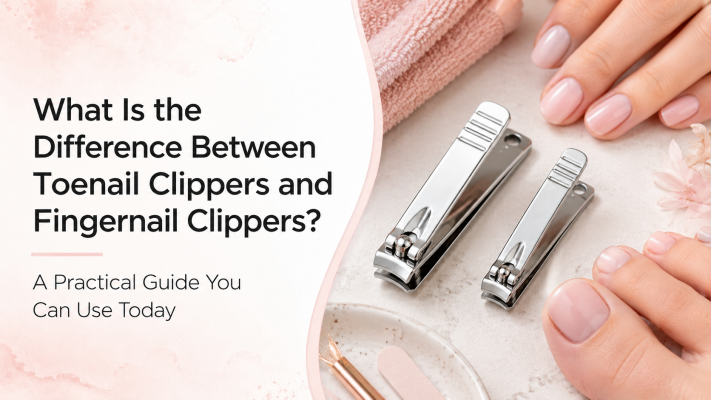
If you’ve ever grabbed the nearest nail clipper and thought, “It’s all the same,” you’re not alone. But if you’re searching what is the difference between toenail clippers and fingernail clippers, you’ve probably noticed something: toenails can be thicker, harder to cut, more likely to cause ingrowns, and easier to crack if you use the wrong tool. Fingernails, on the other hand, need more precision and smoother shaping to avoid splitting at the corners.
The short version is simple: toenail clippers are built for strength and stability; fingernail clippers are built for precision and a cleaner curve. The long version (below) will help you choose the right tool, cut more safely, and avoid the most common problems people create by using one clipper for everything.
The Nail Reality: Toenails and Fingernails Are Different Materials
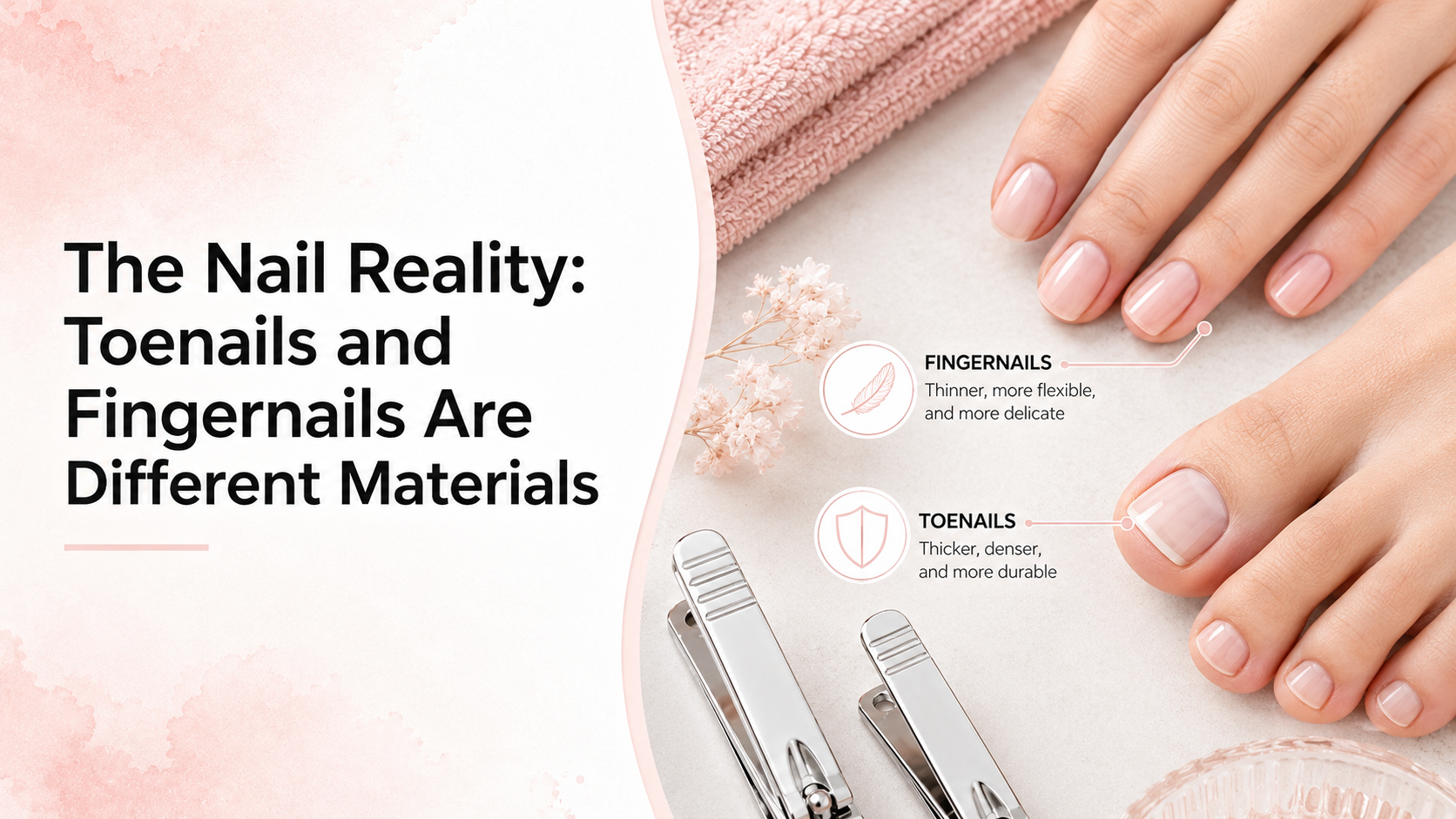
Before tools, understand the surface you’re cutting.
- Toenails are usually thicker and denser. They grow slower, face constant pressure from shoes, and can become harder with age or repetitive trauma.
- Fingernails are typically thinner, more flexible, and more exposed to water, soap, and daily wear—so they’re prone to peeling and splitting.
Because the nail plates behave differently, the clipper design needs to support different cutting pressures and shapes.
The Main Differences in Clippers (What to Look For)
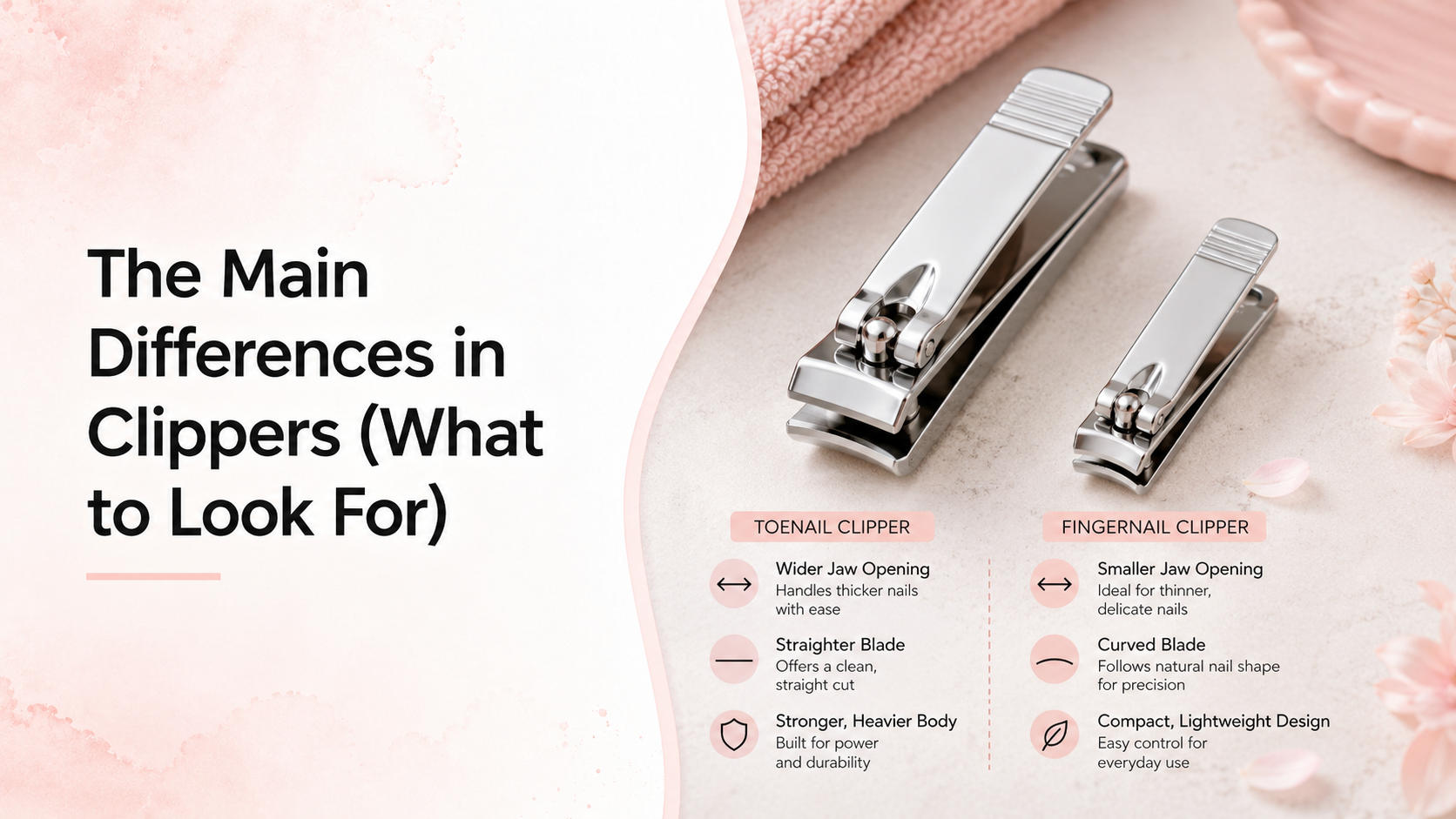
Jaw Width and Opening
Toenail clippers usually have:
- A wider jaw opening to fit thicker nails
- A broader cutting surface for stable trimming
Fingernail clippers usually have:
- A smaller jaw for tighter control
- A more compact cutting area for precision
Why it matters: thick toenails can force a small clipper open awkwardly, leading to crushing rather than cutting.
Blade Curve and Cutting Shape
Fingernail clippers are commonly more curved to match the natural curve of finger nails.
Toenail clippers are often flatter or straighter, because trimming toenails straight across is a key ingrown prevention habit.
Why it matters: using a highly curved fingernail clipper on toes can tempt you to round corners too much—one of the most common triggers of ingrown toenails.
Leverage and Force
Toenail clippers are built for power:
- Stronger lever
- More durable body
- Designed to reduce hand strain when cutting thicker nail plates
Fingernail clippers are built for control:
- Less heavy-duty force required
- Easier to make small adjustments
Why it matters: when you use a weaker clipper on thick toenails, you squeeze harder and create uneven pressure, which can crack the nail edge.
Size and Handling
Fingernail clippers are typically smaller and easier to angle for shaping the curve.
Toenail clippers are often larger and heavier, prioritizing stability over delicate maneuvering.
Why it matters: toenail trimming needs stability and straight cuts; fingernail trimming needs accuracy and clean curves.
The Most Important Difference: How You Should Trim Nails
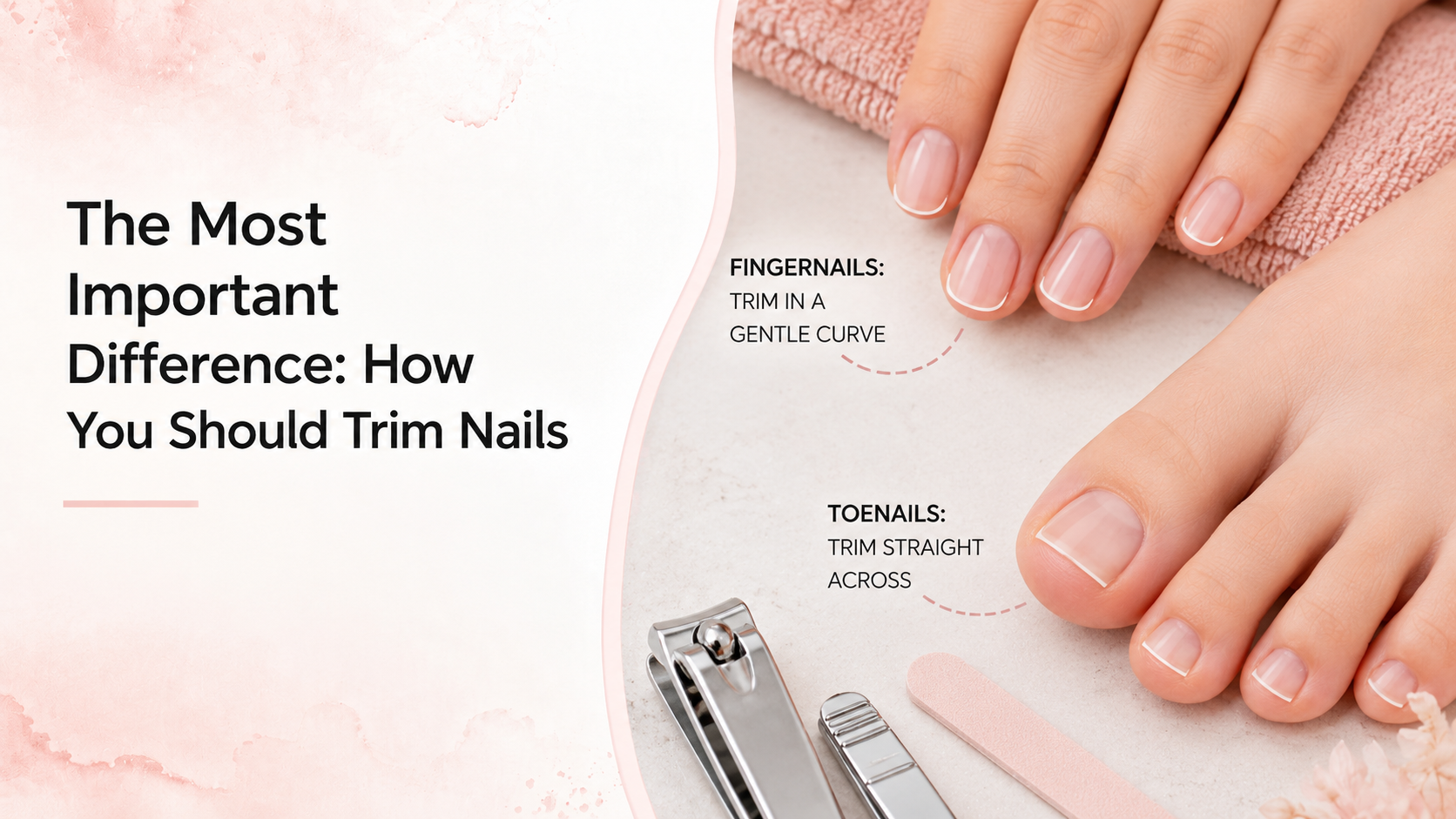
Tool choice matters, but technique is even more important.
Fingernails: Gentle Curve + File Finish
For most people, fingernails look best with a soft curve. The safest method:
- Clip in small bites
- Follow the natural curve lightly
- Finish with a 240-grit file to prevent snags
Toenails: Mostly Straight Across + Smooth Corners
Toenails should be trimmed mostly straight across:
- Small bites across the edge
- Do not cut deep corners
- Smooth corners with a file instead of rounding with the clipper
This reduces pressure points and lowers ingrown risk.
What Happens If You Use the Wrong Clipper?
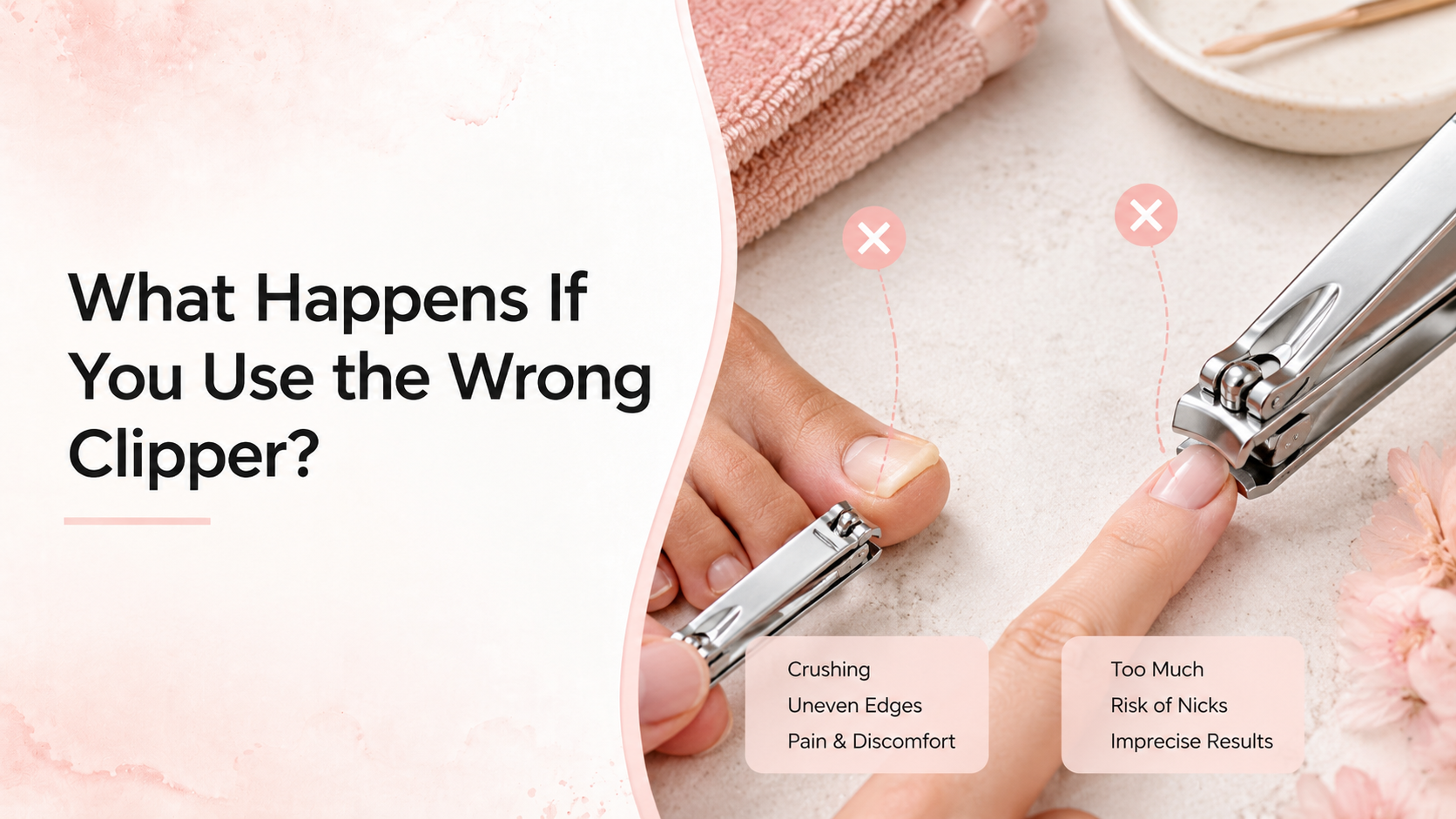
Using a fingernail clipper on toenails
Common outcomes:
- Crushing or bending the nail instead of slicing
- Jagged edges that snag socks
- Over-rounding corners → ingrown risk
- More hand strain because the clipper isn’t designed for thickness
Using a toenail clipper on fingernails
Common outcomes:
- Less precise shaping
- Too-flat cuts that require extra filing
- Increased chance of uneven edges if you try to follow curves
It’s not “dangerous,” but it’s less efficient and often messier.
Which One Should You Buy If You Only Want One?
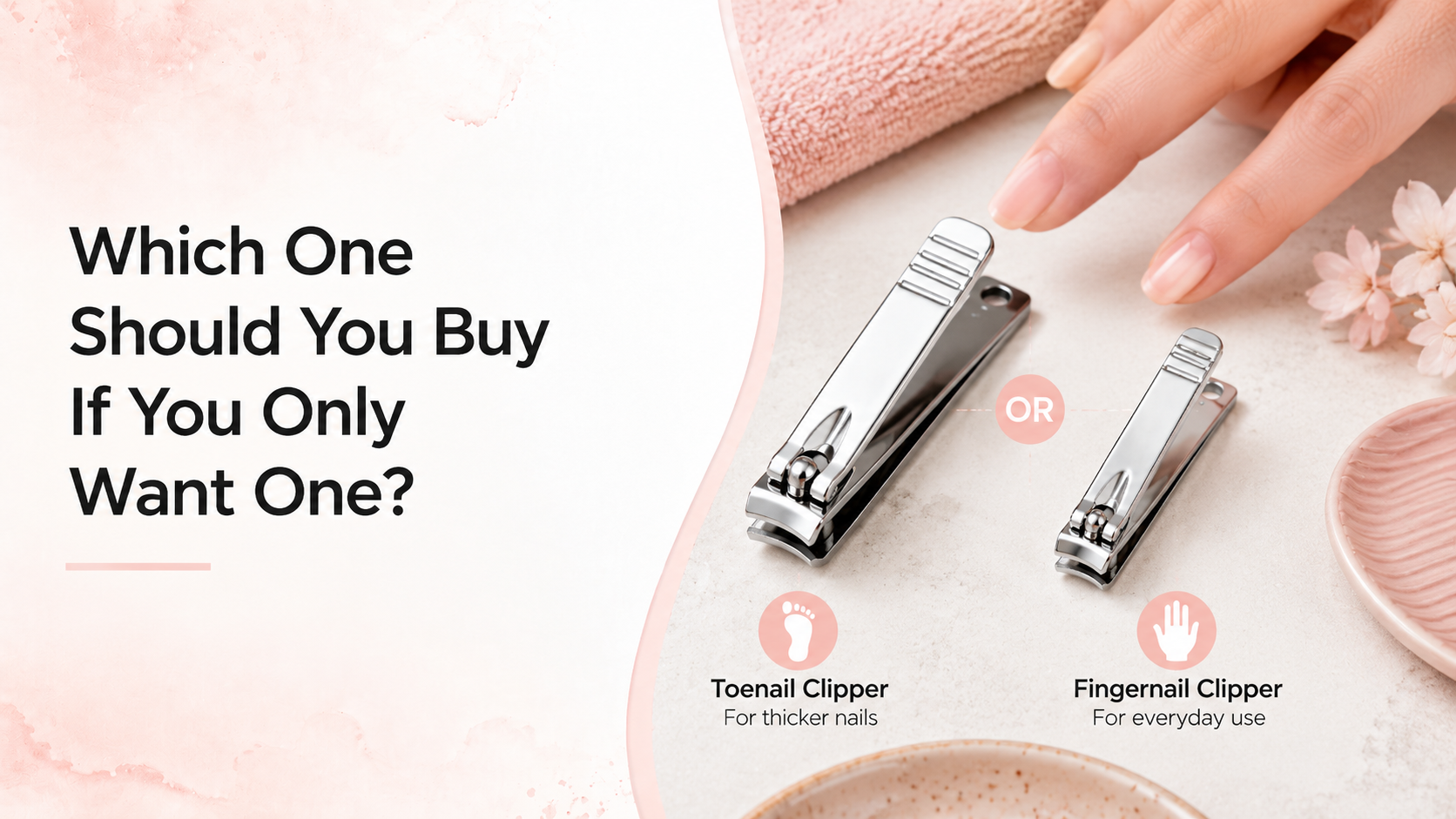
If you absolutely want one clipper, choose based on your biggest need:
- If your toenails are thick or you’re prone to ingrowns: buy a toenail clipper and file fingers more carefully.
- If your toenails are normal and you care about precise fingernail shape: buy a fingernail clipper and keep trimming toes straight and gentle.
But for the best results, two separate clippers are the simplest upgrade you can make. They’re inexpensive compared to the benefit: cleaner cuts, less splitting, and fewer toe issues.
Safety Notes for Ingrowns and Thick Nails
If you have:
- recurring ingrown toenails
- severe thickening or yellowed nails
- pain, swelling, heat, discharge
- diabetes or circulation issues
Don’t rely on home clipping alone. Seek professional care. Thick or infected nails require special trimming and sometimes medical treatment.
Cleaning and Hygiene Differences (Feet Need More Discipline)
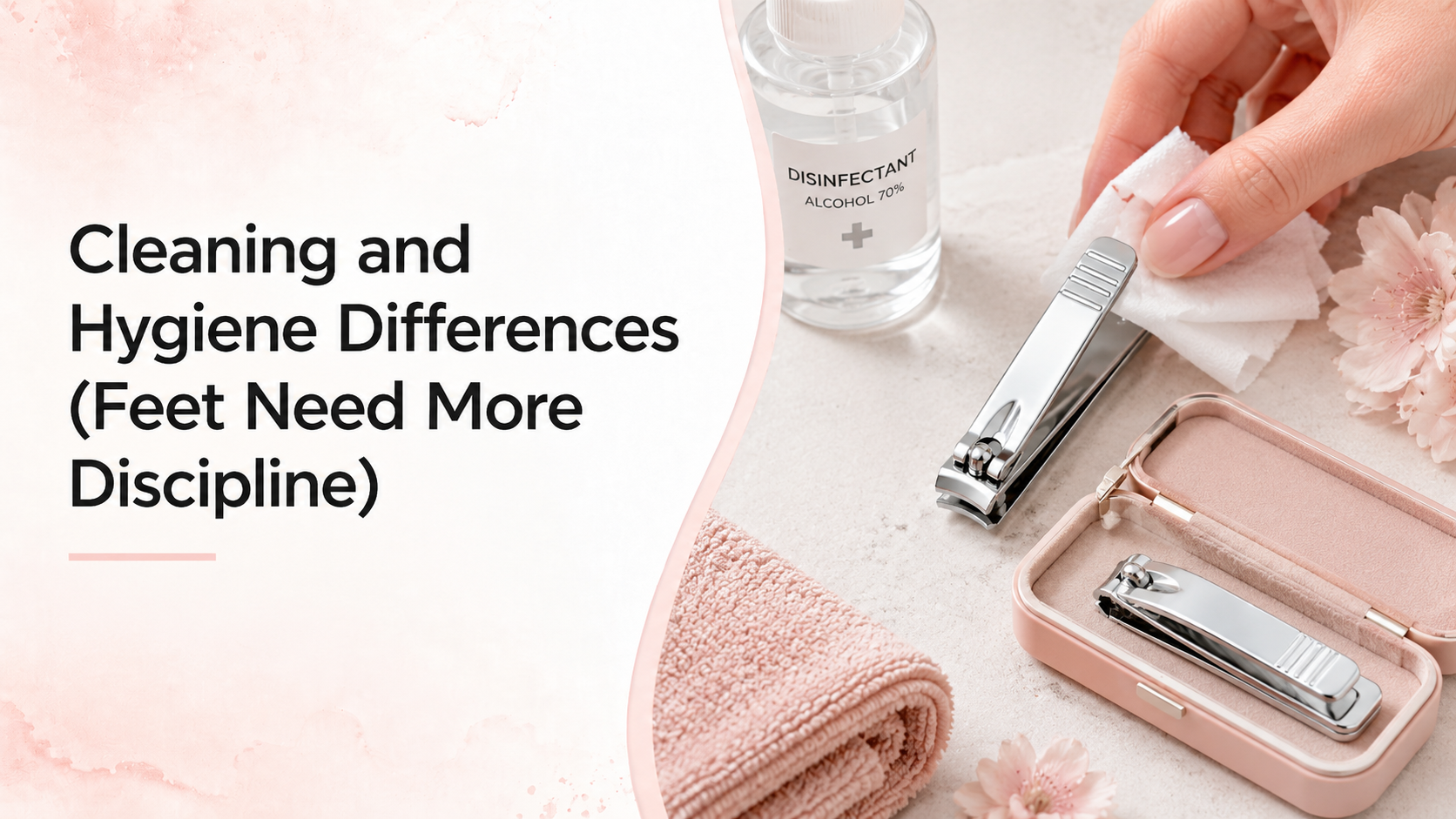
Feet are exposed to more moisture and bacteria. Even for personal use:
- Clean clippers after trimming toenails
- Disinfect and dry fully
- Store in a closed case
- Avoid sharing clippers between family members
This reduces fungal spread and keeps blades sharp longer.
Simple Pro Tips for Better Cuts (Both Hands and Feet)
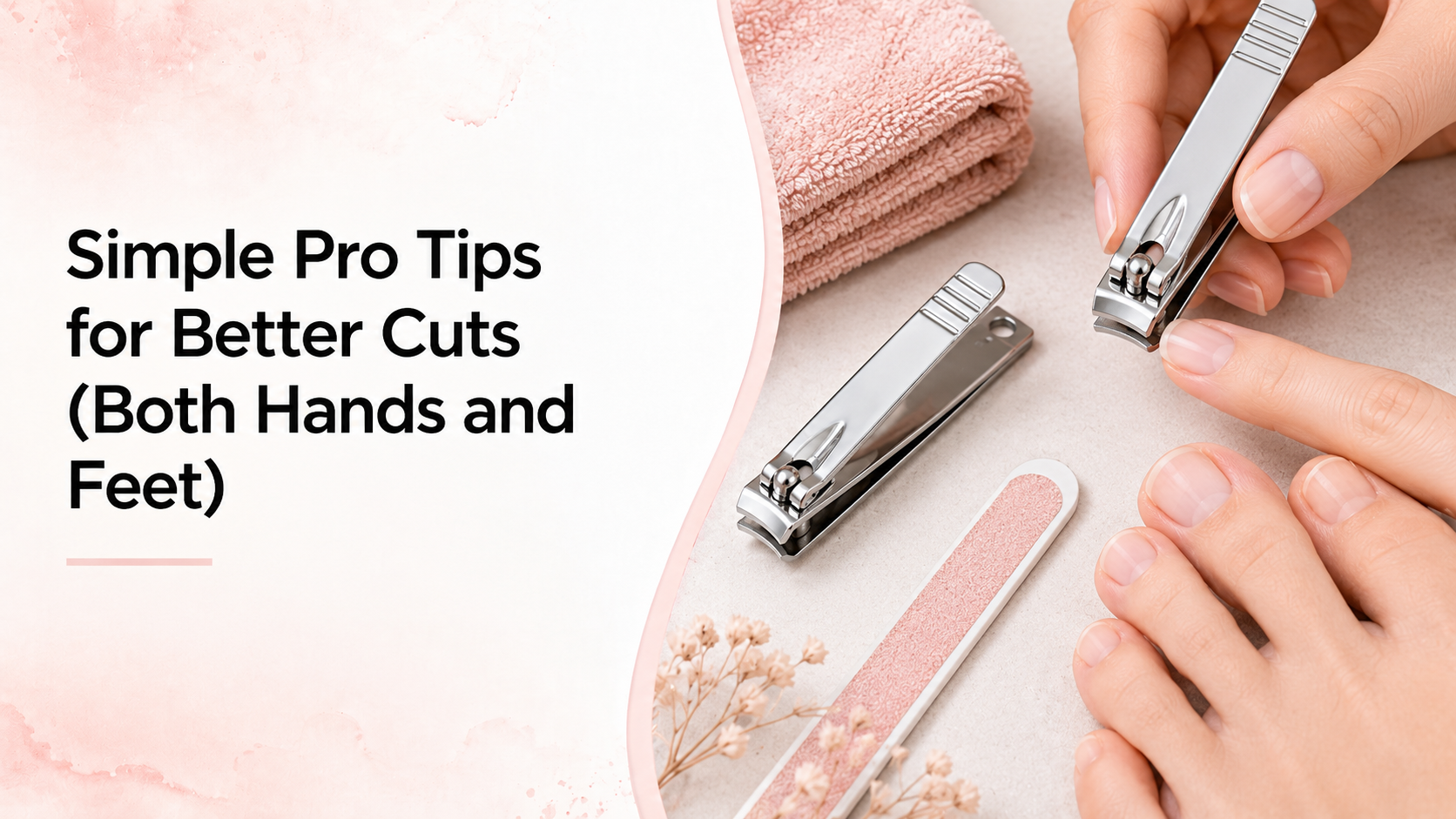
- Clip nails when they are clean and dry
- Use small bites instead of one big cut
- Always finish with a file to smooth micro-cracks
- Replace clippers if they tug or crush instead of slicing
- Store clippers dry to prevent rust at the hinge
So, what is the difference between toenail clippers and fingernail clippers? Toenail clippers are designed for thicker nails, stronger leverage, and straighter cuts that reduce ingrown risk. Fingernail clippers are designed for precision, a cleaner curve, and easier shaping for daily hand grooming.
Using the right tool for the right nail doesn’t just make trimming easier—it helps prevent splitting, jagged edges, and painful toe issues. If you want smoother results with less effort, separating your tools for hands and feet is a small change with a big payoff.